
2cm vs. 3cm Countertops: Which Thickness Should You Choose? (Plywood Subtop, Edge Profiles, Strength & Cost Guide)
Written & Reviewed by AGS Stones Craftsmen
Master Stone Fabricators & Licensed Cabinet Contractors • Duluth, GA
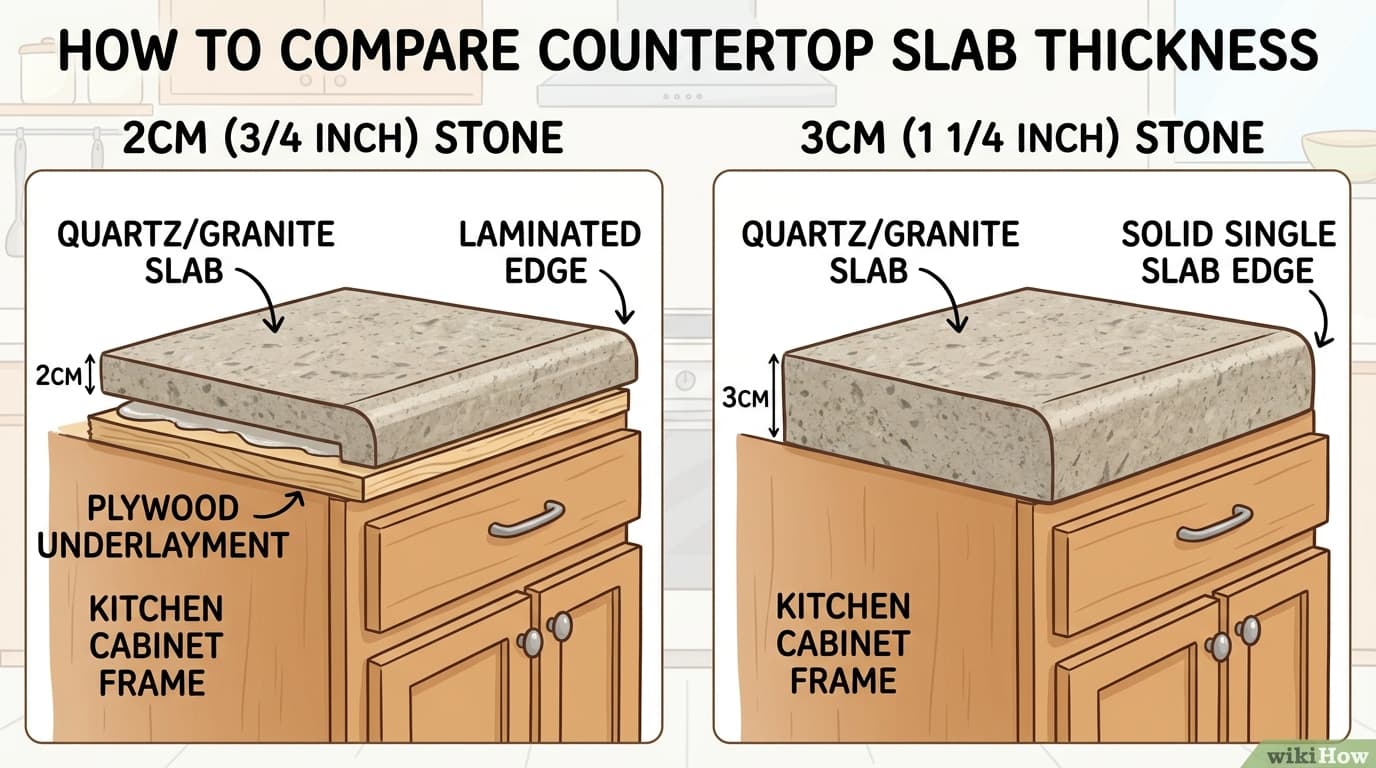
Key Takeaways: Quick Summary
- ✓3cm (1 1/4" / 30mm) is the gold standard for residential kitchens across Georgia and the East Coast, offering superior structural strength without requiring plywood subtops.
- ✓2cm (3/4" / 20mm) stone requires a full 5/8" or 3/4" exterior-grade plywood subtop deck screwed onto cabinets, plus a laminated or mitered drop edge to hide the raw wood underneath.
- ✓While raw 2cm slabs can cost 15% to 25% less at stone distributors, the added carpentry labor for plywood subtops and mitered edge fabrication often makes 2cm equal to or MORE expensive than solid 3cm.
- ✓3cm stone supports longer cantilevers (up to 10"–12" unsupported) compared to 2cm (maximum 6" unsupported before requiring continuous steel reinforcement).
- ✓2cm shines best for vertical applications like full-height quartz backsplashes, fireplace cladding, and shower walls where lighter weight (12–14 lbs/sq ft) is an advantage.
The Homeowner's Thickness Dilemma: When browsing stone yards in Metro Atlanta, you will quickly notice slabs quoted in two primary thicknesses: 2cm (approximately 3/4 inch) and 3cm (approximately 1 1/4 inches). At first glance, 2cm slabs look tempting because the raw material price tag is often 15% to 25% lower. But does thinner stone really save you money in the end, or will hidden installation requirements like plywood subtops and edge lamination eat up all your savings? Here is the complete breakdown by Georgia master fabricators.
At a Glance: 2cm vs. 3cm Countertop Comparison Matrix
Review the core technical differences before choosing your kitchen or bathroom countertop slab:
| Feature | 2cm Slabs (~3/4 Inch / 20mm) | 3cm Slabs (~1 1/4 Inch / 30mm) |
|---|---|---|
| Actual Thickness | 20 mm (approx. 0.787 in.) | 30 mm (approx. 1.181 in.) |
| Plywood Subtop Decking | Mandatory (5/8" or 3/4" plywood) | None Needed (Mounts directly on cabinets) |
| Edge Profile Options | Requires laminated drop edge or miter fold | Monolithic: Eased, Bullnose, Ogee, Demi, Waterfall |
| Visible Edge Seam Line | Yes, continuous glued epoxy seam along edge | No edge glue seam (100% solid stone) |
| Weight Per Square Foot | 12 – 14 lbs / sq. ft. | 18 – 22 lbs / sq. ft. |
| Max Unsupported Overhang | Max 6 Inches (requires continuous brackets) | 10 – 12 Inches (Natural Stone Institute compliant) |
| Regional Standard | West Coast (California, Arizona) & Prefabs | East Coast (Georgia, Atlanta, Carolinas, Florida) |
| Best Applications | Full-height wall backsplashes, shower walls, furniture | Kitchen islands, heavy undermount sinks, main counters |
Method 1: Understanding the Plywood Subtop & Laminated Edge (2cm)
The single biggest structural difference between 2cm and 3cm countertops is the underlayment. Because 2cm natural stone (about 3/4 inch thick) is more flexible, it cannot support its own weight across cabinet spans without deflecting:
The Mandatory Plywood Subdeck
Before laying a 2cm slab, installers must screw a full sheet of 5/8-inch or 3/4-inch CDX or exterior-grade plywood across the entire top of your base cabinets. This wood deck provides a continuous structural bed that prevents the thinner stone from cracking when someone sets down a heavy cast iron pot or leans heavily on the surface.
The Laminated Drop Edge
Because there is a piece of rough plywood directly beneath the stone, you cannot leave the front edge exposed—otherwise, you would look directly at raw plywood layers! To conceal this, fabricators must cut an extra 1 1/2" wide strip of stone and epoxy it underneath the front rim (a laminated edge) or cut a 45-degree mitered drop edge.
The Risk of Seam Telegraphing
When two pieces of stone are glued together to form a built-up 1 1/2" edge, there is an unavoidable epoxy seam. In consistent fine-grain quartz, this seam can be virtually invisible. However, on natural granite or veined quartzite (such as Calacatta quartz or Taj Mahal quartzite), matching veins across the laminated edge is difficult and often creates a visible horizontal or miter line.
Method 2: Why 3cm (1 1/4 Inch) Is the Preferred Standard in Georgia
If you walk into any luxury kitchen showroom in Atlanta, Alpharetta, Buckhead, or Duluth, over 95% of the countertops on display will be 3cm solid stone. Here is why builders and fabricators rely on 3cm:
100% Solid Monolithic Stone
No glued edges, no plywood sandwiches, and no chance of edge lamination delaminating over decades of moisture exposure. The profile (eased, demi-bullnose, ogee) is carved directly into the single solid slab.
Fast, Clean Direct Installation
3cm stone rests directly on top of level cabinet rails with structural silicone adhesive. Your cabinet drawers have immediate clearance, and there is no raw subtop wood to swell or collect moisture under the sink.
Heavy-Duty Undermount Sink Support
Large cast-iron, fireclay, and deep stainless steel undermount sinks hang with rock-solid security. 3cm stone provides substantial stone depth for mechanical undermount sink clips and epoxy anchors.
Superior Cantilever & Overhang Strength
Per Natural Stone Institute standards, 3cm engineered quartz can safely cantilever up to 12 inches without brackets, whereas 2cm stone requires steel brackets if extending more than 6 inches.
Method 3: The Cost Myth: Is 2cm Actually Cheaper Than 3cm?
Many homeowners receive estimates from discount fabricators advertising low square-footage prices based on 2cm slabs, only to find the final installed cost exceeds a quality 3cm quote. Here is why:
⚖️ The Hidden Math Behind 2cm vs. 3cm Pricing
Raw Slab Cost: A raw 2cm slab costs roughly $10 to $20 less per square foot from stone distributors because quarries can cut more slabs per block and shipping containers hold more units without exceeding highway axle weight limits.
Plywood & Carpentry Subtop: Purchasing 3/4" exterior plywood and having carpenters rip, level, and screw it across all kitchen base cabinets adds $8 to $15 per linear foot in materials and labor.
Edge Lamination Shop Labor: Cutting stone strips, applying two-part color-matched epoxy, clamping every 6 inches, letting it cure, and then milling the edge profile adds $15 to $35 per linear foot in fabrication shop labor.
Method 4: When Should You Actually Choose 2cm Countertop Stone?
While 3cm is the winner for kitchen horizontal work surfaces, 2cm stone is not obsolete. In fact, there are several applications where 2cm is the superior architectural choice:
Full-Height Vertical Backsplashes
Extending matching slab quartz from your countertops up to the upper cabinets or ceiling is dramatically easier with 2cm. At 12–14 lbs/sq ft, it puts less stress on wall studs and drywall anchors while taking up 1/2" less depth behind your range.
Bathroom Shower Walls & Tub Surrounds
Seamless full-slab shower walls eliminate grout lines. 2cm slabs provide complete waterproof durability while keeping the overall wall weight manageable for bathroom framing.
Modern European Ultra-Slim Countertops
Contemporary, minimalist kitchen designs sometimes deliberately seek a sleek, ultra-thin 20mm profile without an edge drop. If paired with full-box European frameless cabinetry that has full top stretchers, 2cm creates a striking knife-edge look.
Method 5: How AGS Stones Fabricates Slabs in Duluth, GA
At AGS Stones & Cabinets, our climate-controlled stone fabrication shop in Duluth utilizes high-precision 5-axis CNC waterjet bridge saws:
Live Slab Inspection
Walk our indoor slab gallery in Duluth, GA to touch and compare 2cm and 3cm slabs side by side, observing edge profiles, weight, and light reflection.
CNC Mitered Aprons
Want the luxury look of a 2-inch or 3-inch thick massive stone island? We execute seamless 45° CNC miter folds on both 2cm and 3cm slabs with book-matched vein flow.
Digital Proliner Templating
Our digital measuring lasers verify that your cabinets are level to within 1/16 of an inch, ensuring your new stone rests with zero tension or stress points.
Not Sure Which Slab Thickness Fits Your Remodel?
Visit our Duluth, GA showroom or request an instant free online estimate. Our stone specialists will help you select the ideal stone thickness, edge style, and underlayment for your budget and lifestyle!
Serving the Greater Metro Atlanta Community
AGS Stones & Cabinets provides factory-direct fabrication, laser templating, and professional stone installation across all surrounding Georgia neighborhoods:
Common Questions from Homeowners
Why do fabricators in Atlanta and Duluth recommend 3cm over 2cm for kitchens?+
Across Georgia and the Southeast, 3cm (approx. 1 1/4 inch) is the established construction standard. It installs directly on top of cabinet frames with no need for plywood decking, eliminates glued laminate edge seams along perimeter faces, supports heavy undermount sinks and appliances safely, and provides a rich, substantial visual profile.
Do 3cm granite or quartz countertops need plywood under them?+
No. Standard 3cm natural granite, quartzite, and engineered quartz slabs possess sufficient flexural strength to sit directly on the level perimeter rails of quality kitchen base cabinets. Silicone adhesive holds the stone securely without requiring plywood decking.
Is 2cm stone really cheaper than 3cm stone?+
Only the raw un-fabricated slab is cheaper (typically 15% to 25% less due to reduced quarrying mass and lower freight shipping weight). However, once you factor in the carpentry labor and materials for cutting and installing a plywood subtop deck, plus the stone shop labor to miter, glue, clamp, and polish a laminated edge to hide the wood, total installed costs for 2cm and 3cm are virtually identical.
Can you see the seam line on a 2cm laminated edge?+
On 2cm countertops with a laminated or mitered built-up edge, there is always a continuous horizontal or 45-degree epoxy seam running along the front perimeter. While skilled master fabricators like AGS Stones color-match epoxy adhesives with high accuracy, the seam can sometimes be noticeable on stones with dramatic flowing veining.
Can 2cm stone be used for a full-height kitchen backsplash?+
Yes! In fact, 2cm is often preferred for full-height vertical slab backsplashes, fireplace surrounds, and bathroom shower wall cladding. At 12 to 14 lbs per square foot (compared to 18 to 22 lbs for 3cm), 2cm places significantly less structural load on vertical drywall studs and protrudes less behind cooktops and upper wall cabinets.
Ready to Experience the AGS Stones Difference?
Skip the retail middlemen. Visit our Duluth showroom to hand-select your exact full-size stone slabs, or schedule a free in-home digital laser templating estimate.
Explore Related Services & Local Guides
Core Fabrication Services
Local Service Hubs
Remodeling Guides
- → How to Clean and Seal Granite Countertops: The Step-by-Step Care Guide
- → Granite vs. Quartz: Which Stone Does Your Kitchen Actually Need?
- → How to Prepare Your Kitchen for Countertop Installation: The Ultimate Checklist
- → How to Clean & Care for Custom Cabinets: Keeping Finishes Like New
- → How to Measure Countertops for a Fast & Accurate Estimate: Step-by-Step
- → How Much Do Granite & Quartz Countertops Cost in Atlanta & Duluth, GA?
- → How to Choose the Best Countertop Edge Profile: Eased, Bullnose, Ogee & Waterfall Guide
- → How to Fix a Chip in Granite or Quartz Countertops: The DIY Repair Guide
- → How to Remove Stains from Quartz Countertops: The Complete wikiHow Guide
- → How to Match Countertops with Cabinets: The Complete Designer Guide
- → Quartzite vs. Quartz Countertops: The Complete Durability, Heat & Care Guide
- → Can You Put Hot Pans on Quartz Countertops? The WikiHow Heat Safety & Burn Repair Guide
- → Are Countertop Seams Normal? The Complete wikiHow Guide to Seam Placement, Hiding & Repair
- → How Far Can Countertops Overhang Without Support? The Complete wikiHow Island & Bar Bracket Guide
- → Honed vs. Polished vs. Leathered Countertops: Which Stone Finish Is Best for Your Kitchen? (Texture, Cleaning, Fingerprints & Cost Guide)
- ✦ Return to All Guides & How-Tos
Related How-To Guides
Continue learning with more step-by-step homeowner tutorials
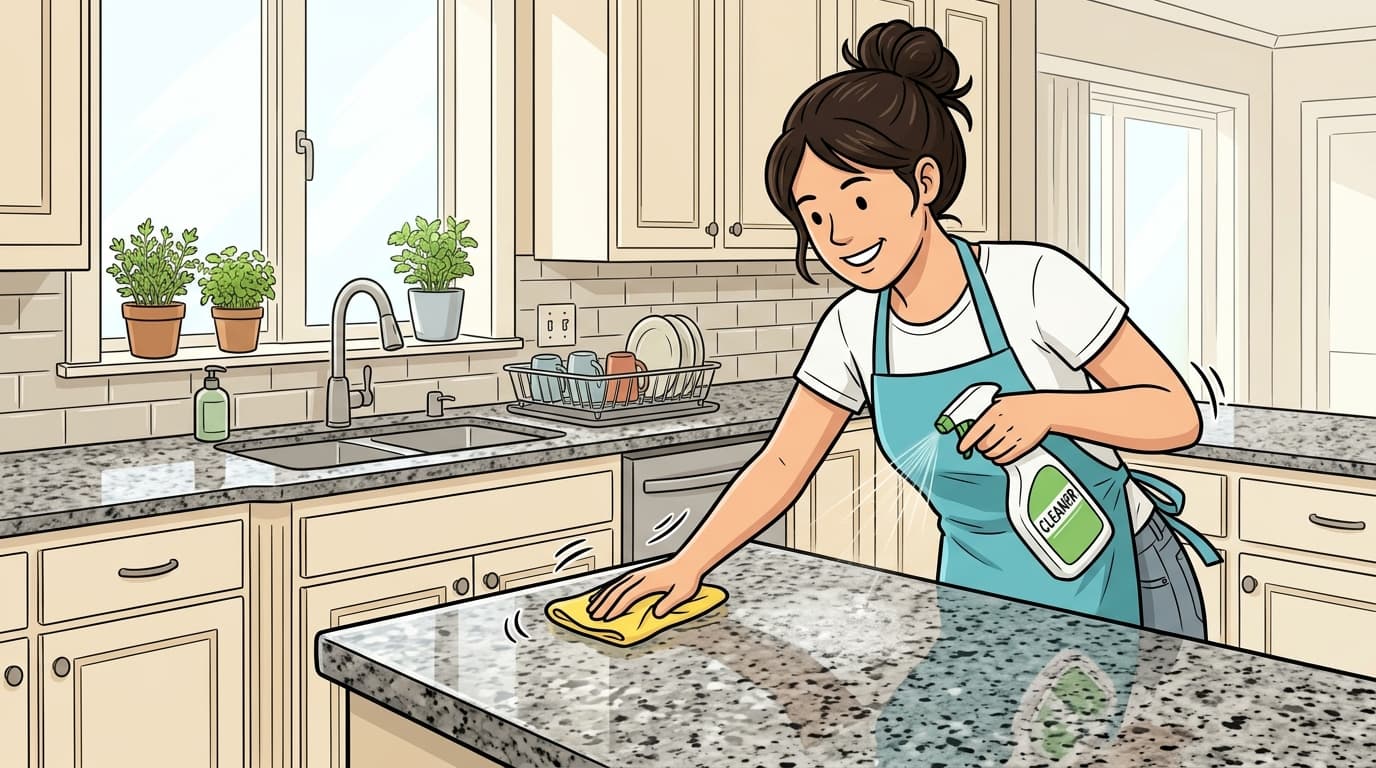
How to Clean and Seal Granite Countertops: The Step-by-Step Care Guide
Step-by-step wikiHow-style guide to cleaning, sanitizing, and sealing natural granite. Master the water droplet test, remove stubborn water rings, and protect your stone factory-fresh.
Read Guide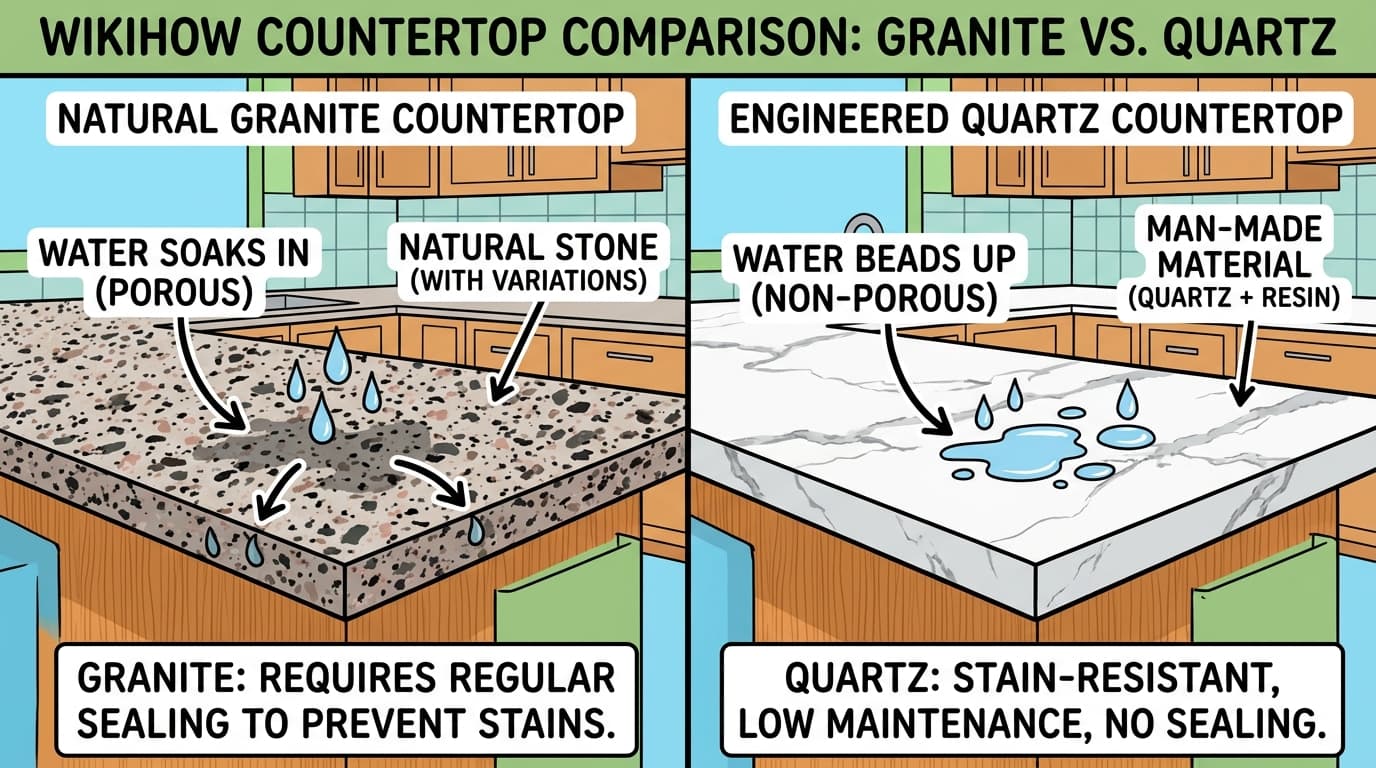
Granite vs. Quartz: Which Stone Does Your Kitchen Actually Need?
Confused between natural granite and engineered quartz? Learn the real differences in heat resistance, daily maintenance, seam visibility, and price per square foot.
Read Guide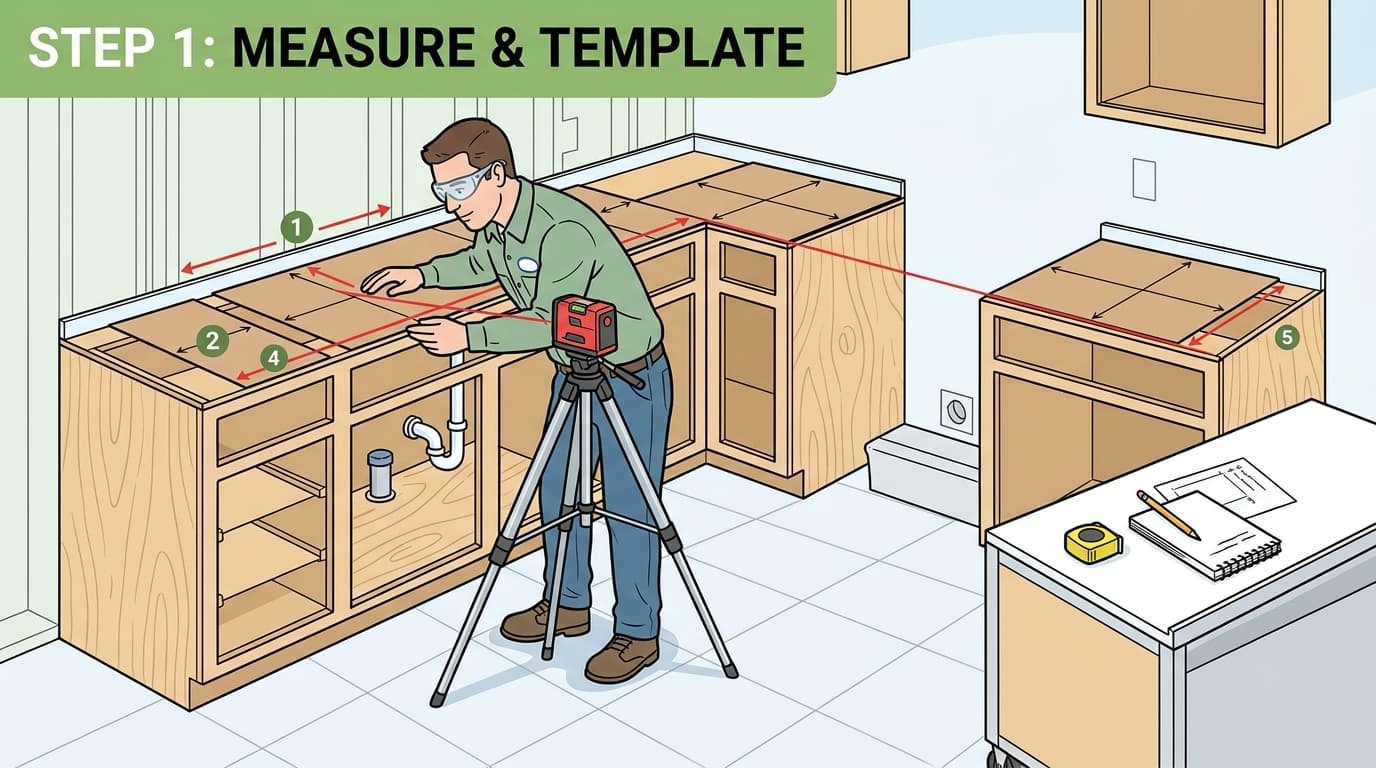
How to Prepare Your Kitchen for Countertop Installation: The Ultimate Checklist
Step-by-step preparation guide for laser templating and install day. Learn how to clear base cabinets, coordinate plumbers, disconnect sinks, and ensure a flawless fit.
Read Guide