
Can You Put Hot Pans on Quartz Countertops? The WikiHow Heat Safety & Burn Repair Guide
Written & Reviewed by AGS Stones Craftsmen
Master Stone Fabricators & Licensed Cabinet Contractors • Duluth, GA
Key Takeaways: Quick Summary
- ✓No, you should never place hot pans, baking sheets, or cast-iron skillets directly on engineered quartz countertops.
- ✓While natural quartz crystals withstand over 1,500°F, engineered quartz contains 7% to 10% polymer resin binders that soften and scorch at temperatures above 150°F to 300°F.
- ✓Small countertop appliances like air fryers, slow cookers, and electric griddles emit sustained radiant heat downward and are the #1 cause of hidden yellow burns and thermal shock cracks.
- ✓Sudden extreme temperature differentials (thermal shock) can cause quartz to fracture along its internal structure or around sink cutouts.
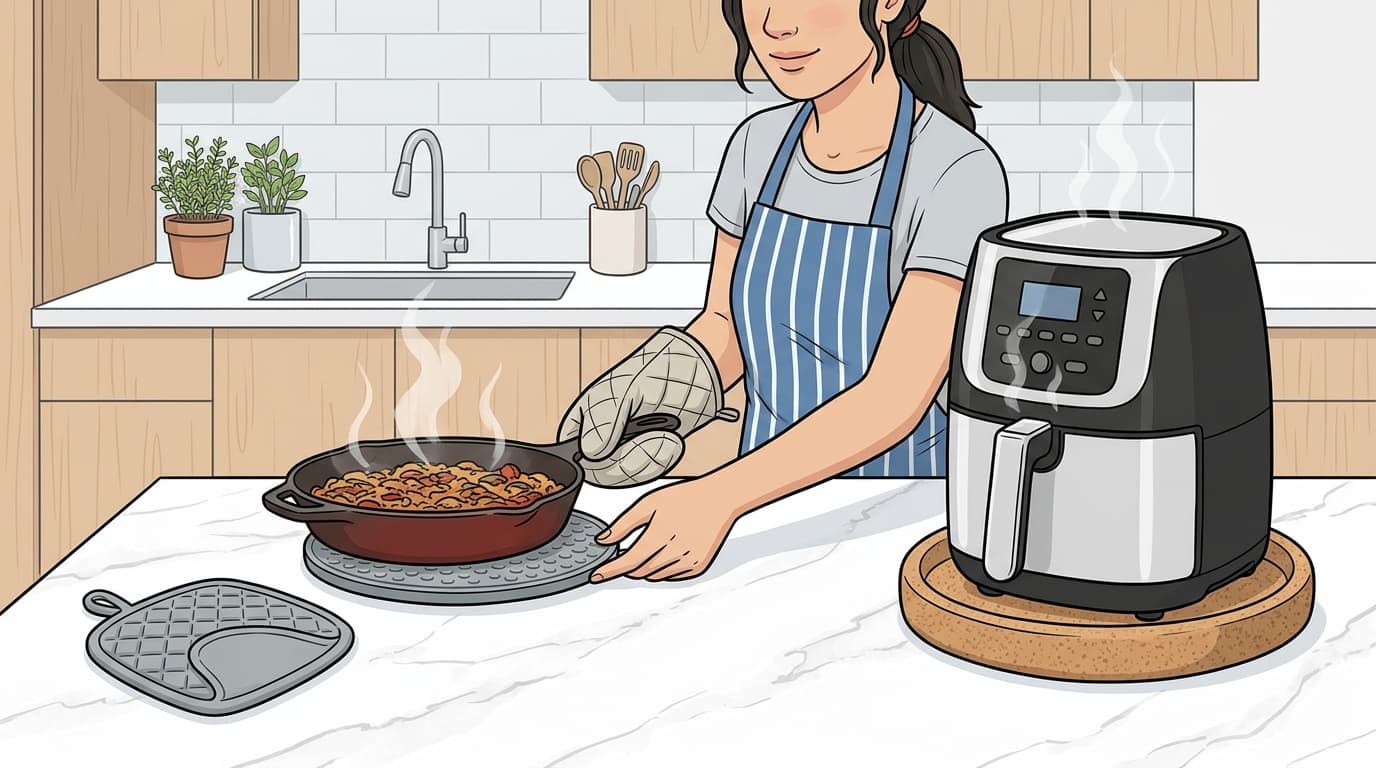
- ✓Always use heat-resistant silicone trivets, hot pads, or thick wooden cutting boards under hot cookware and countertop appliances.
Engineered quartz is celebrated across Metro Atlanta homes for its breathtaking marble-like veining, zero-porosity, and carefree resistance to wine, coffee, and lemon juice stains. But there is one question every homeowner asks when designing their dream kitchen at AGS Stones & Cabinets: “Can I put a hot pan directly onto my quartz countertop?”
The short answer is a definitive No. While marketing brochures often tout quartz as “heat resistant,” there is a critical distinction between heat resistant and heat proof. In this step-by-step wikiHow-style guide, our master stone fabricators break down the chemistry behind quartz heat limits, expose the everyday countertop appliances that cause hidden burns, and demonstrate how to protect and repair your surfaces factory-fresh.
Crucial Rule for Quartz Countertop Owners
Never place cookware hotter than 150°F (65°C) directly onto quartz without a trivet. A frying pan straight off an induction burner or gas range typically measures between 350°F and 500°F—more than hot enough to permanently singe the synthetic polyester and acrylic resins that hold your quartz slab together.
Method 1: The Science of Quartz (Why It Scorches While Granite Doesn't)
To understand why quartz reacts to heat, you have to look inside its manufacturing composition. Unlike 100% natural stones like granite or natural quartzite, engineered quartz is an industrial hybrid material:
Crushed Natural Quartz Mineral
The overwhelming bulk of the slab consists of pure quartz crystal aggregate—one of the hardest minerals on Earth (ranking 7 on the Mohs scale). Pure quartz crystals withstand temperatures up to 1,500°F without batting an eye.
Synthetic Polymer & Acrylic Resins
The remaining component is a liquid polymer resin binder that glues the crushed crystals into a solid, impervious slab. These resins are plastics. At temperatures between 150°F and 300°F, polymer resins soften, yellow, degrade, and can produce burnt discoloration or milky dull rings.
What Happens When Thermal Shock Occurs?
Beyond resin melting, rapid heating triggers thermal shock. Quartz expands when heated. If you set a 450°F cast iron pan on a 70°F countertop in the middle of winter, that 10-inch circle of stone expands violently while the cold stone surrounding it remains rigid. This localized differential creates intense kinetic tension that can fissure the slab—especially near narrow bridge areas around undermount sink cutouts and cooktops.
Method 2: Beware the “Hidden Culprits” (Small Countertop Appliances)
When homeowners think of heat damage, they imagine a sizzling pan from the stove. But in our Duluth and Alpharetta stone restoration service calls, over 70% of quartz heat damage is caused by small electrical appliances left running on the counter:
Air Fryers & Convection Toaster Ovens
Air fryers circulate extreme radiant heat. Because their heating element sits close to the bottom metal casing, downward heat transfer radiates directly into the quartz slab beneath for 20 to 45 continuous minutes.
Crockpots & Slow Cookers
While slow cookers do not reach the explosive temperatures of a frying pan, their ceramic insert holds 200°F+ heat against the counter for 8 full hours. This steady thermal soak slowly bakes the resin binders into a yellow shadow.
Electric Griddles & Panini Presses
Flat electric griddles often lack adequate leg elevation. Oil splatters combined with sustained 350°F pancake temperatures will bake grease into the softened resin surface.
Curling Irons & Hair Straighteners
Resting a heated 400°F titanium styling wand on a bathroom vanity quartz top will melt an outline of the wand directly into the polish within 60 seconds.
Method 3: Heat Resistance Comparison (Quartz vs. Other Countertop Materials)
If you are still deciding which surface to install for your kitchen renovation in Atlanta, Johns Creek, or Duluth, review this definitive stone heat tolerance matrix:
| Countertop Surface | Direct Heat Rating | Max Safe Temp Without Trivet | Can a Hot Pan Go Directly On It? | Thermal Shock Risk |
|---|---|---|---|---|
| Engineered Quartz | Moderate (Resin sensitive) | 150°F – 200°F | ❌ NO (Resin burns/yellows) | Moderate – High |
| Natural Granite | High (Igneous rock) | 900°F – 1,200°F | ✔️ Generally Safe (Trivet still advised) | Low |
| Natural Quartzite | Very High (Metamorphic rock) | 1,000°F – 1,400°F | ✔️ Yes (Will not melt or burn) | Very Low |
| Porcelain Slabs | Maximum (Kiln-fired at 2,200°F) | 1,800°F+ | ✔️ Yes (Virtually fireproof) | Virtually Zero |
| Solid Surface (Corian) | Low (Acrylic polymer) | 150°F – 180°F | ❌ NO (Easily warps and scorches) | High |
*Notice: While granite and quartzite can physically take hot pans without melting, stone fabricators still recommend using silicone trivets on every stone to prevent rare micro-fissures from sudden winter thermal shock.
Method 4: Step-by-Step WikiHow Guide to Treating Heat Marks & Scorch Stains
Did someone accidentally set a hot Dutch oven on your quartz island, or did your air fryer leave a faint yellow shadow? Follow these four progressive steps from mildest DIY treatment to professional restoration:
Diagnose: Is It a Surface Grease Burn or Resin Damage?
Run your dry fingernails across the discolored spot. If the surface feels completely glass-smooth, the heat may have only baked surface cooking grease, butter, or pan residue onto the stone polish. If you feel a rough, pitted, sunken, or sticky texture, the resin binder itself has undergone thermal oxidation and melted.
Clean Surface Heat Rings with Bar Keepers Friend Soft Cleanser
For light yellowing caused by surface food scorching, squeeze a quarter-sized drop of Bar Keepers Friend Soft Cleanser (Liquid Cream Formula) directly onto the mark. Dampen a clean microfiber cloth with warm water and gently massage the cream in tight circular motions for 60 to 90 seconds.
The mild oxalic acid in Bar Keepers Friend lifts organic scorch marks without scratching the mineral face. Rinse thoroughly with clean water and buff dry immediately. Never use scouring pads, steel wool, or abrasive gritty powders.
Apply a 24-Hour Baking Soda Poultice for Stubborn Yellowing
If the faint yellow ring persists, mix 3 tablespoons of pure baking soda with warm distilled water until it forms a thick toothpaste paste. Spread the paste 1/4-inch thick over the mark. Cover it with plastic kitchen wrap and tape the edges down with blue painter's tape to trap moisture.
Allow the poultice to sit for 24 hours as it naturally leaches out oxidized pigments. Remove the plastic, wipe away with a damp microfiber cloth, and inspect under natural lighting. For more stubborn stain techniques, read our Complete Quartz Stain Removal Guide.
Deep Carbonized Burns or Cracks: Call a Professional Stone Fabricator
If the heat scorch is deep brown, charred, or accompanied by a hairline thermal fracture, home remedies will not fix it. DIY grinding will leave a dull, milky depression in your slab that permanently ruins the factory polish.
Our technicians at AGS Stones use industrial water-cooled diamond honing pads (ranging from 400 to 3000 grit) and UV-cured liquid acrylic epoxies tinted to match your exact slab's background color and veining. If a thermal crack has appeared, we can stabilize it using high-tensile structural epoxy injections before it spreads across your island.
Method 5: The 4 Golden Habits for 100% Heat-Safe Kitchens
Keeping your quartz countertops looking brand new for 25+ years is effortless once you establish four simple kitchen habits:
1. Keep Silicone Trivets Next to the Range
Keep 2 to 3 flexible silicone hot pads permanently resting in a drawer or crock right beside your cooktop. Make it automatic muscle memory to slide a trivet into place before lifting any skillet, boiling pasta pot, or roasting pan off the burner.
2. Buy a Heat-Resistant Silicone Mat for Air Fryers
Pick up an inexpensive heat-insulating silicone appliance runner or thick end-grain wooden cutting board to serve as a permanent “landing dock” under your air fryer, toaster oven, and Instant Pot. The wood or silicone absorbs radiant heat completely.
3. Never Rest Slow Cookers Directly on Quartz Corners
Never position an all-day slow cooker within 6 inches of a countertop seam or sink cutout. Narrow stone bridges have less mass to dissipate heat and are the most vulnerable zones for thermal shock fractures.
4. Equip Bathroom Vanities with Silicone Styling Mats
Place a heat-resistant silicone styling mat or hanging silicone pocket on bathroom quartz vanities so teenagers and family members can safely rest hot curling wands and straighteners without damaging the stone.
Need Quartz Repair or Looking to Upgrade Your Kitchen?
Whether you need professional stone repair for a damaged countertop in Metro Atlanta, or you are looking to install premium Calacatta quartz, natural granite, or quartzite slabs with factory-direct pricing, our Duluth showroom team is here to help!
Serving the Greater Metro Atlanta Community
AGS Stones & Cabinets provides factory-direct fabrication, laser templating, and professional stone installation across all surrounding Georgia neighborhoods:
Common Questions from Homeowners
Can I put a hot pan straight from the stove onto quartz countertops?+
No. Placing a hot pan (which frequently exceeds 350°F to 500°F) directly onto quartz will scorch or melt the synthetic polymer resins that bind the stone crystals together. This results in permanent yellow or brown burn rings, surface cloudiness, or sudden thermal stress fractures.
Can an air fryer or Instant Pot damage quartz countertops?+
Yes! In fact, air fryers, crockpots, and electric roasters are the leading causes of residential quartz countertop repairs in Metro Atlanta. Unlike a pan that touches for a few seconds, an air fryer radiates high heat (up to 400°F) downward into the countertop for 30 to 60 continuous minutes, gradually degrading the resin and causing spider cracks.
What is thermal shock and why does it crack quartz countertops?+
Thermal shock occurs when a localized area of the quartz slab experiences a sudden, extreme temperature change while the surrounding stone remains room temperature. The heated section expands rapidly while the adjacent cold stone resists the expansion, creating intense internal tension that releases as a visible fissure or crack, particularly near sink cutouts or cooktop seams.
Can yellow heat marks or scorch stains on quartz be repaired?+
If the heat only caused light surface resin oxidation, gentle buffing with a non-abrasive cleanser like Bar Keepers Friend Soft Cleanser or mild baking soda paste can lighten the mark. However, if deep resin melting or carbonization occurred, professional diamond honing, mechanical resurfacing, or precision resin color matching by our Duluth stone restoration team is required.
How does quartz heat resistance compare to granite and quartzite?+
Natural granite and quartzite have vastly superior direct heat resistance. Both natural stones were forged under volcanic conditions and tolerate heat over 1,200°F without scorching or melting, making them safer next to high-heat cooktops. Engineered quartz is more stain-resistant and uniform, but requires faithful trivet usage.
Ready to Experience the AGS Stones Difference?
Skip the retail middlemen. Visit our Duluth showroom to hand-select your exact full-size stone slabs, or schedule a free in-home digital laser templating estimate.
Explore Related Services & Local Guides
Core Fabrication Services
Local Service Hubs
Remodeling Guides
- → How to Clean and Seal Granite Countertops: The Step-by-Step Care Guide
- → Granite vs. Quartz: Which Stone Does Your Kitchen Actually Need?
- → How to Prepare Your Kitchen for Countertop Installation: The Ultimate Checklist
- → How to Clean & Care for Custom Cabinets: Keeping Finishes Like New
- → How to Measure Countertops for a Fast & Accurate Estimate: Step-by-Step
- → How Much Do Granite & Quartz Countertops Cost in Atlanta & Duluth, GA?
- → How to Choose the Best Countertop Edge Profile: Eased, Bullnose, Ogee & Waterfall Guide
- → How to Fix a Chip in Granite or Quartz Countertops: The DIY Repair Guide
- → How to Remove Stains from Quartz Countertops: The Complete wikiHow Guide
- → How to Match Countertops with Cabinets: The Complete Designer Guide
- → Quartzite vs. Quartz Countertops: The Complete Durability, Heat & Care Guide
- ✦ Return to All Guides & How-Tos
Related How-To Guides
Continue learning with more step-by-step homeowner tutorials
How to Clean and Seal Granite Countertops: The Step-by-Step Care Guide
Step-by-step wikiHow-style guide to cleaning, sanitizing, and sealing natural granite. Master the water droplet test, remove stubborn water rings, and protect your stone factory-fresh.
Read Guide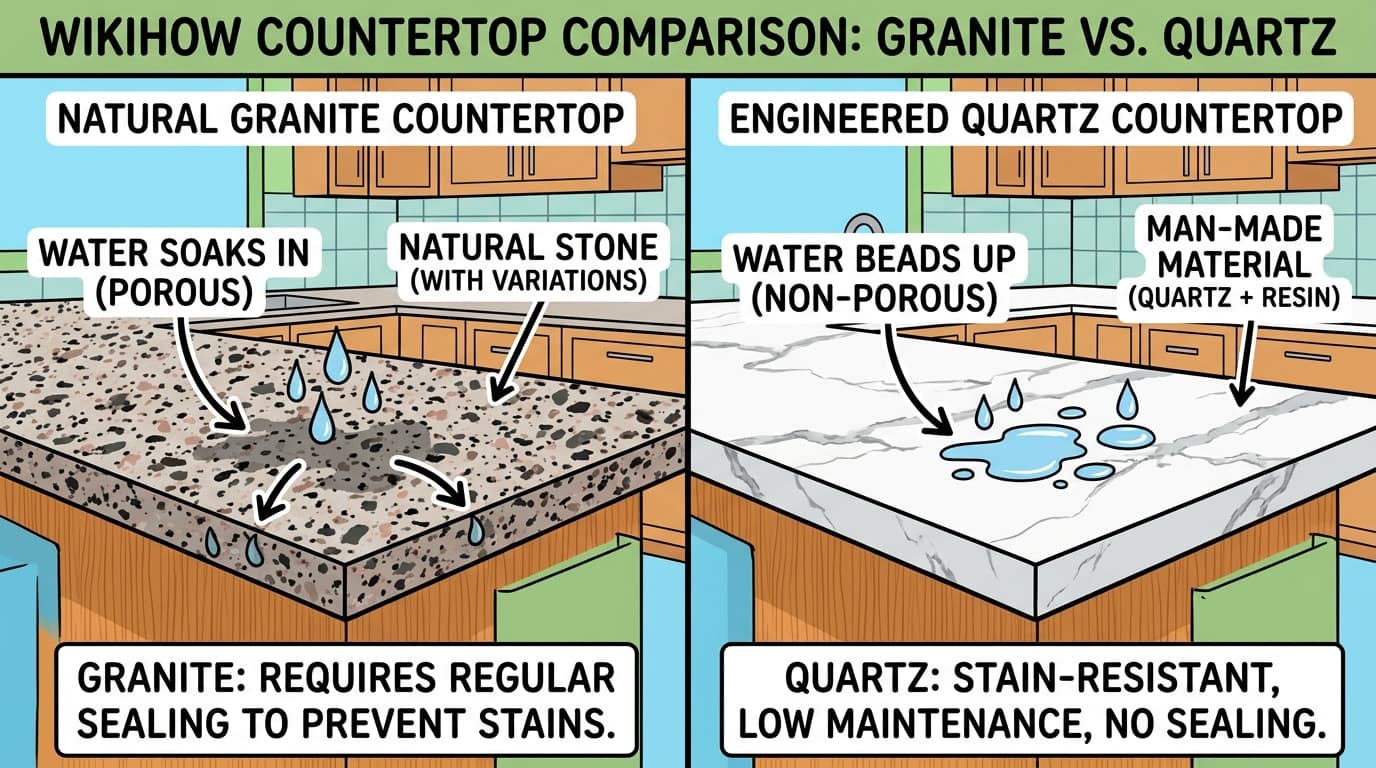
Granite vs. Quartz: Which Stone Does Your Kitchen Actually Need?
Confused between natural granite and engineered quartz? Learn the real differences in heat resistance, daily maintenance, seam visibility, and price per square foot.
Read Guide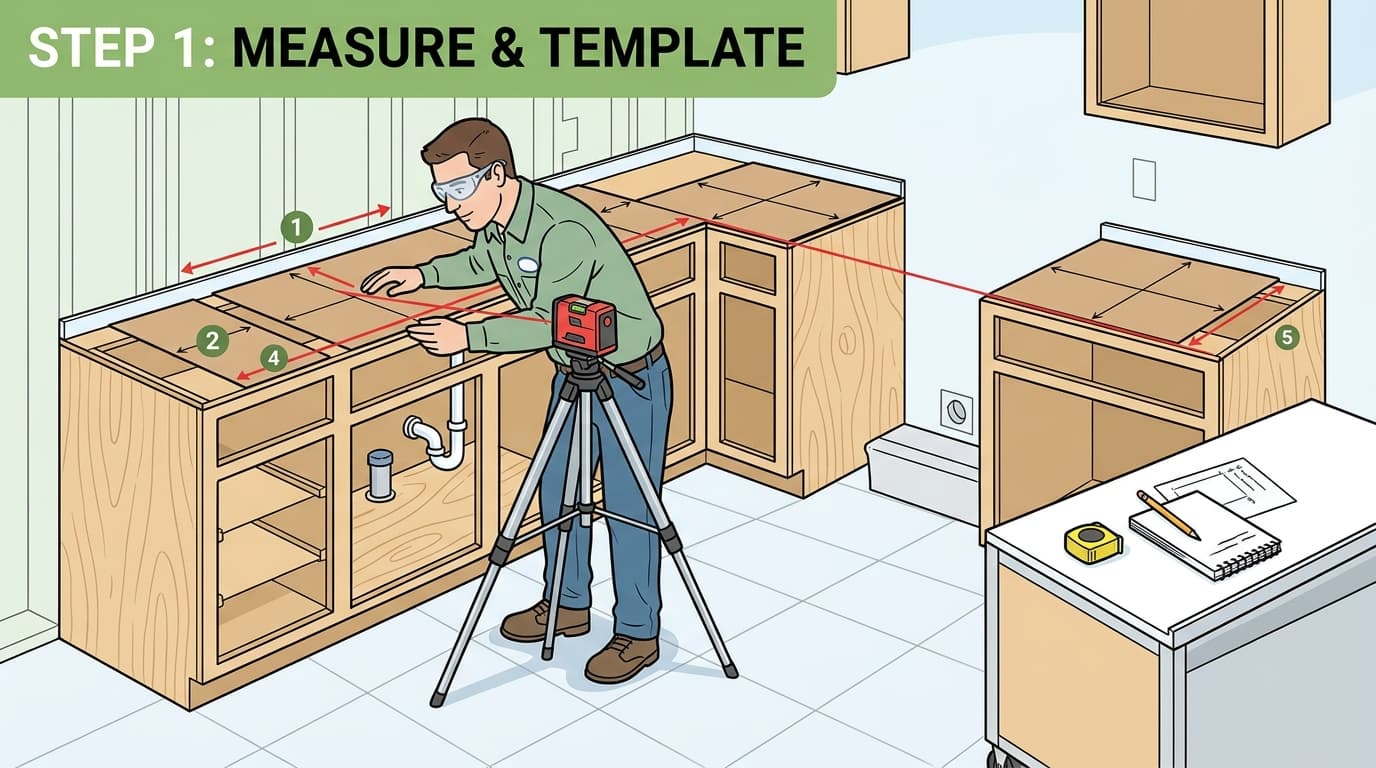
How to Prepare Your Kitchen for Countertop Installation: The Ultimate Checklist
Step-by-step preparation guide for laser templating and install day. Learn how to clear base cabinets, coordinate plumbers, disconnect sinks, and ensure a flawless fit.
Read Guide