
How to Remove Stains from Quartz Countertops: The Complete wikiHow Guide
Written & Reviewed by AGS Stones Craftsmen
Master Stone Fabricators & Licensed Cabinet Contractors • Duluth, GA
Key Takeaways: Quick Summary
- ✓Engineered quartz is naturally non-porous and never requires periodic sealing, but surface discoloration occurs when organic pigments or minerals bond to the polymeric resin binder.
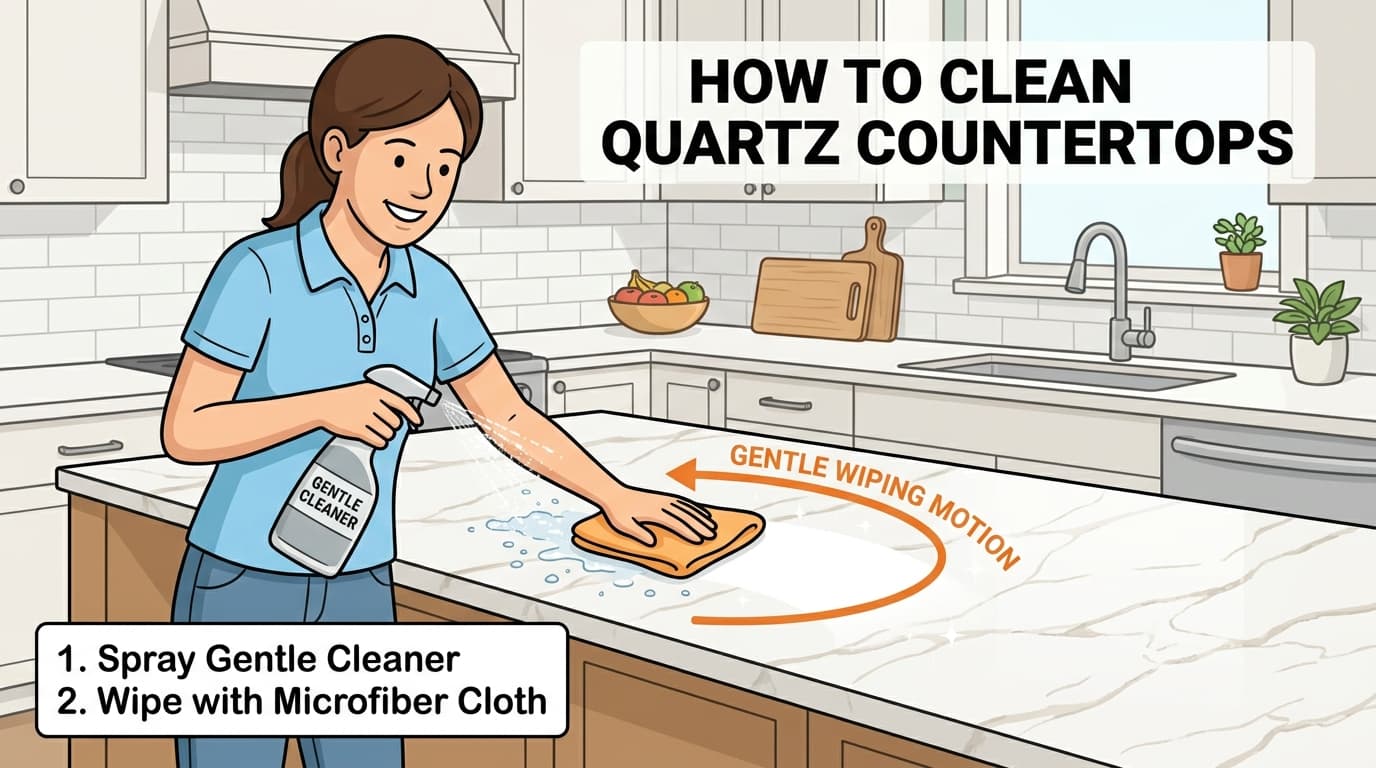
- ✓For routine spills, clean immediately using warm water, a few drops of pH-neutral liquid dish soap (like Dawn), and a soft microfiber cloth.
- ✓For stubborn organic stains (red wine, coffee, curry, turmeric, tomato paste), apply a gentle baking soda and water paste poultice for 10 to 15 minutes before wiping clean.
- ✓To remove hard water mineral rings around sink faucets and calcium scale, use 70% isopropyl rubbing alcohol on a microfiber cloth—never soak quartz with high-acid vinegar.
- ✓For dried glue, paint, or grease crusts, gently lift them using a flexible plastic razor scraper held at a 30-degree angle; avoid steel wool and abrasive green scouring pads.
- ✓Never use bleach, oven cleaners, drain openers, acetone (nail polish remover), or alkaline cleaners above pH 10, as they break down the polymer resin and cause permanent cloudy discoloration.
Engineered quartz is widely celebrated as the king of low-maintenance kitchen surfaces. Unlike natural granite, marble, or quartzite, quartz countertops never need to be impregnated with chemical sealers, never absorb red wine deep into volcanic pores, and resist everyday bacterial growth with zero hassle. However, "stain-resistant" does not mean 100% stain-proof.
If you spilled a splash of Cabernet Sauvignon during a dinner party, dripped bright yellow turmeric curry while cooking, or noticed cloudy white mineral rings around your undermount sink faucet, don't panic. Because quartz is non-porous, stains almost never penetrate the slab—they sit right on the surface polymer resin binder.
Whether you recently had countertops fabricated by our team at AGS Stones & Cabinets or you are maintaining quartz in your home in Duluth, Alpharetta, or Johns Creek, GA, this illustrated wikiHow-style guide shows you the exact safe, fabricator-approved methods to lift every type of stain without voiding your countertop warranty.
🧰 Safe Tools & Cleaning Supplies Checklist
Method 1: The 60-Second Daily Routine for Fresh Spills
The easiest way to treat a quartz stain is to never let it dry. The polymer resins that bind natural quartz crystals together will not absorb liquids, but dried sauces form a sticky surface film that attracts dirt.
Blot the Liquid Immediately
As soon as red wine, coffee, olive oil, or citrus drips onto the counter, blot it gently with a dry microfiber cloth or soft paper towel. Blotting lifts the liquid off the stone rather than smearing it across a wider surface area.
Wipe with Warm Water and Mild Dish Soap
Mix 1 teaspoon of gentle pH-neutral dish soap in 2 cups of warm water. Moisten a clean microfiber towel with the solution and wipe down the area in smooth S-curves. Dish soap naturally emulsifies cooking oils and food grease without stripping the factory gloss.
Rinse and Buff Dry Completely
Wipe the area once more with a cloth dampened only with fresh water to remove any soapy film residue. Finally, buff the quartz with a completely dry microfiber towel. Drying prevents tap water mineral deposits from evaporating into dull spots.
Method 2: Lifting Stubborn Food & Wine Stains (The Baking Soda Poultice)
If red wine, dark berries, espresso, mustard, or turmeric dried overnight on white quartz, regular soap and water won't be enough. The secret weapon used by stone professionals is a non-toxic baking soda paste poultice.
Mix the Baking Soda Paste
In a small bowl, combine 3 tablespoons of pure baking soda with just enough warm water (about 1 to 2 teaspoons) to create a thick, spreadable paste with the consistency of toothpaste. Baking soda is mildly alkaline (pH around 8.3) and acts as an ultra-fine, non-scratch micro-abrasive.
Apply Directly Over the Stain
Using a silicone spatula, spoon, or your fingertips, spread a 1/8-inch thick layer of the baking soda paste over the entire stained area, extending slightly past the borders of the mark.
Cover with a Damp Cloth & Let Rest (15–20 Minutes)
Drape a damp microfiber cloth or a piece of clear plastic wrap over the paste to prevent it from drying out too quickly. Let the poultice sit undisturbed for 15 to 20 minutes. As it rests, the baking soda draws the organic pigment out of the surface resin.
Gently Wipe Away in Gentle Circles
Remove the cover and gently wipe the paste away using light circular motions with your damp cloth. Do not press hard. Rinse thoroughly with clean warm water and buff dry. For stubborn turmeric or curry, repeat the process a second time.
Method 3: Dissolving Hard Water Mineral Rings Around Faucets
In Gwinnett and Fulton County homes, tap water naturally contains trace minerals like calcium and magnesium. When water splashes behind the faucet and evaporates, chalky white rings form that feel rough to the touch.
Use 70% Isopropyl Alcohol
Pour a small amount of standard 70% rubbing alcohol onto a cotton ball or microfiber rag. Rub the white mineral ring in circular motions for 30 to 45 seconds. Alcohol dissolves light limescale and mineral deposits without etching the quartz resin.
For Thick Scale: Bar Keepers Friend Soft Cleanser
If the mineral ring is thick and raised, apply a dime-sized drop of Bar Keepers Friend Soft Cleanser (liquid formula). Gently massage it over the ring with a damp microfiber sponge for no more than 60 seconds. The oxalic acid breaks the calcium bonds safely.
Method 4: Removing Adhesive, Dried Paint, or Candle Wax
Sticky residues from painter's tape, label adhesives, dried craft paint, or dripped candle wax require mechanical removal before solvent cleaning.
Scrape Gently with a Plastic Razor Blade
Hold a flexible plastic razor blade or plastic putty knife at a shallow 30-degree angle to the stone surface. Gently push forward to slice under the dried wax or paint. Plastic scrapers peel the debris without scratching the quartz resin.
Dissolve Remaining Adhesive with Goo Gone or Alcohol
Apply a few drops of Goo Gone or isopropyl alcohol to a paper towel and dab the sticky residue. Let it sit for 2 minutes to soften the glue, then wipe clean. Wash immediately with dish soap and warm water to remove any citrus oil residue.
⚠️ The Fabricator's Blacklist: 6 Products That Permanently Damage Quartz
Because quartz contains roughly 7–10% polymeric resins, certain common household chemicals cause irreversible chemical etching, yellowing, or pitting that cannot be polished away:
❌ Chlorine Bleach & Clorox Soaks
Bleach oxidizes and breaks down the polyester resins in engineered stone, causing irreversible yellow discoloration and a chalky, dull surface haze.
❌ Acetone & Nail Polish Remover
Acetone is an aggressive solvent capable of dissolving resins. Leaving acetone on quartz melts the surface polish and creates a permanent cloudy chemical burn.
❌ Oven Cleaners & Drano
Caustic alkaline degreasers with pH over 10 (containing sodium hydroxide or lye) rapidly attack quartz binders, stripping the gloss within seconds.
❌ Green Scotch-Brite Scouring Pads
Abrasive scouring pads contain aluminum oxide crystals that scratch the resin finish. Always use 100% soft microfiber cloths or cellulose sponges.
❌ Concentrated Acid Soaks (Vinegar & CLR)
While a momentary splash won't destroy quartz, letting acidic vinegar, lemon juice, or CLR sit on quartz for hours degrades the resin luster.
❌ Thermal Shock from Crockpots & Skillets
Resins expand at a different rate than quartz crystals. Placing a 350°F+ slow cooker or air fryer directly on quartz can cause sudden thermal crack fractures. Always use silicone trivets!
Thinking of Upgrading Your Kitchen Countertops?
Explore our full slab inventory of premium Calacatta quartz, sparkling white quartz, and exotic natural granite at our Duluth showroom. Free digital laser in-home estimates and 5-day turnaround across Metro Atlanta.
Serving the Greater Metro Atlanta Community
AGS Stones & Cabinets provides factory-direct fabrication, laser templating, and professional stone installation across all surrounding Georgia neighborhoods:
Common Questions from Homeowners
Does quartz stain easily compared to natural granite or marble?+
No. Quartz is one of the most stain-resistant countertop materials available because it is engineered with roughly 90–93% pulverized natural quartz mineral bound together by 7–10% high-grade polymer resins. Unlike unsealed granite or marble, liquids cannot penetrate deep into microscopic pores. When quartz appears stained, the discoloration is almost always sitting on the surface resin layer, making it completely removable with the right techniques.
How do I remove stubborn turmeric, curry, or yellow mustard stains from white quartz?+
Turmeric and mustard contain intense natural dyes (curcumin) that cling to polymer resins. Mix equal parts baking soda and water into a smooth paste (similar to toothpaste consistency). Spread it generously over the yellow stain, cover with a damp microfiber cloth, and let it rest for 15 to 20 minutes. Gently wipe with the cloth in circular motions. If faint yellow remains, dampen a cotton pad with 70% isopropyl alcohol and wipe gently.
Can I use Bar Keepers Friend or a Magic Eraser on quartz countertops?+
You can use Bar Keepers Friend Soft Cleanser (liquid formula), but use it sparingly with plenty of water and a soft cloth without heavy scrubbing. Never use the dry abrasive powder version. As for Magic Erasers (melamine foam), use extreme caution: melamine foam is microscopic sandpaper (equivalent to 3,000–5,000 grit abrasive). Rubbing aggressively with a Magic Eraser can strip the factory gloss and leave a dull, hazy spot that cannot be wiped away.
How do I get rid of hard water white rings around my kitchen sink faucet?+
Metro Atlanta tap water contains natural dissolved minerals. To dissolve hard water mineral haze around your faucet base, saturate a soft microfiber towel with 70% rubbing alcohol and wrap it around the faucet base for 5 minutes. The alcohol dissolves mineral crust without reacting with the resin. Avoid soaking quartz with undiluted vinegar or CLR, which can etch and dull the resin sheen.
What should I do if a chemical burn or permanent stain won’t come out?+
If a harsh chemical (like Drano, bleach, or acetone) was left on the countertop and created a permanent cloudy chemical burn, standard cleaning pastes will not fix it because the resin itself has been damaged. In such cases, contact our professional stone fabrication team in Duluth, GA. Our technicians can assess whether machine diamond buffing or precision resurfacing can restore the original gloss.
Ready to Experience the AGS Stones Difference?
Skip the retail middlemen. Visit our Duluth showroom to hand-select your exact full-size stone slabs, or schedule a free in-home digital laser templating estimate.
Explore Related Services & Local Guides
Core Fabrication Services
Local Service Hubs
Remodeling Guides
- → How to Clean and Seal Granite Countertops: The Step-by-Step Care Guide
- → Granite vs. Quartz: Which Stone Does Your Kitchen Actually Need?
- → How to Prepare Your Kitchen for Countertop Installation: The Ultimate Checklist
- → How to Clean & Care for Custom Cabinets: Keeping Finishes Like New
- → How to Measure Countertops for a Fast & Accurate Estimate: Step-by-Step
- → How Much Do Granite & Quartz Countertops Cost in Atlanta & Duluth, GA?
- → How to Choose the Best Countertop Edge Profile: Eased, Bullnose, Ogee & Waterfall Guide
- → How to Fix a Chip in Granite or Quartz Countertops: The DIY Repair Guide
- ✦ Return to All Guides & How-Tos
Related How-To Guides
Continue learning with more step-by-step homeowner tutorials
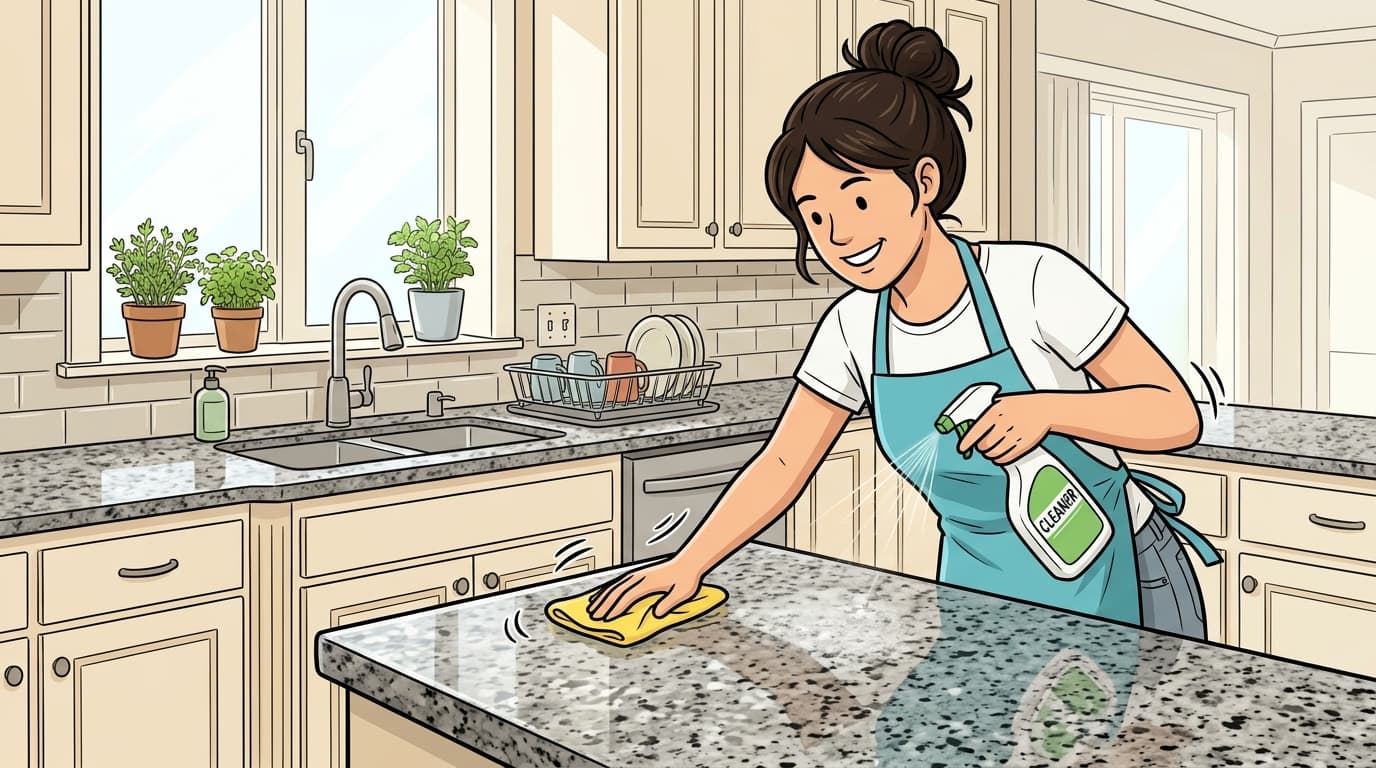
How to Clean and Seal Granite Countertops: The Step-by-Step Care Guide
Step-by-step wikiHow-style guide to cleaning, sanitizing, and sealing natural granite. Master the water droplet test, remove stubborn water rings, and protect your stone factory-fresh.
Read Guide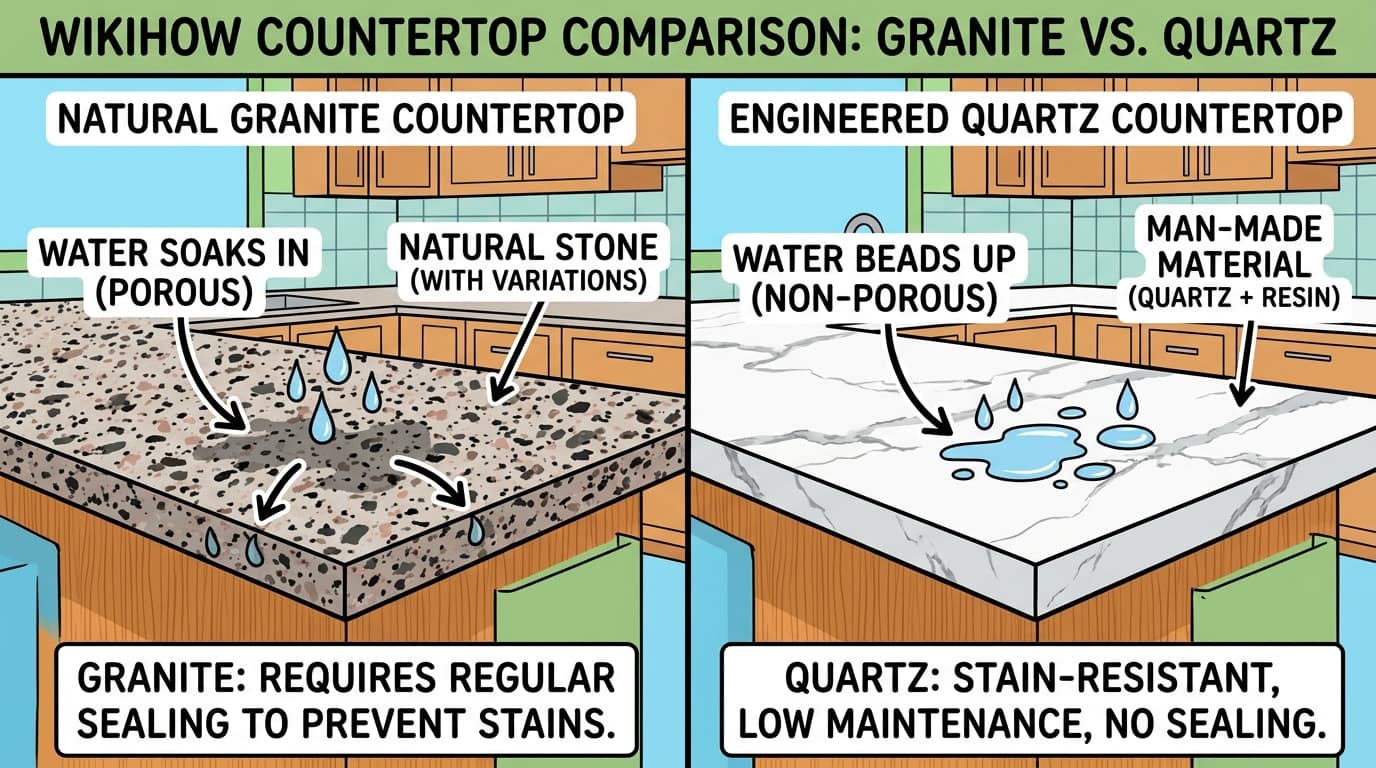
Granite vs. Quartz: Which Stone Does Your Kitchen Actually Need?
Confused between natural granite and engineered quartz? Learn the real differences in heat resistance, daily maintenance, seam visibility, and price per square foot.
Read Guide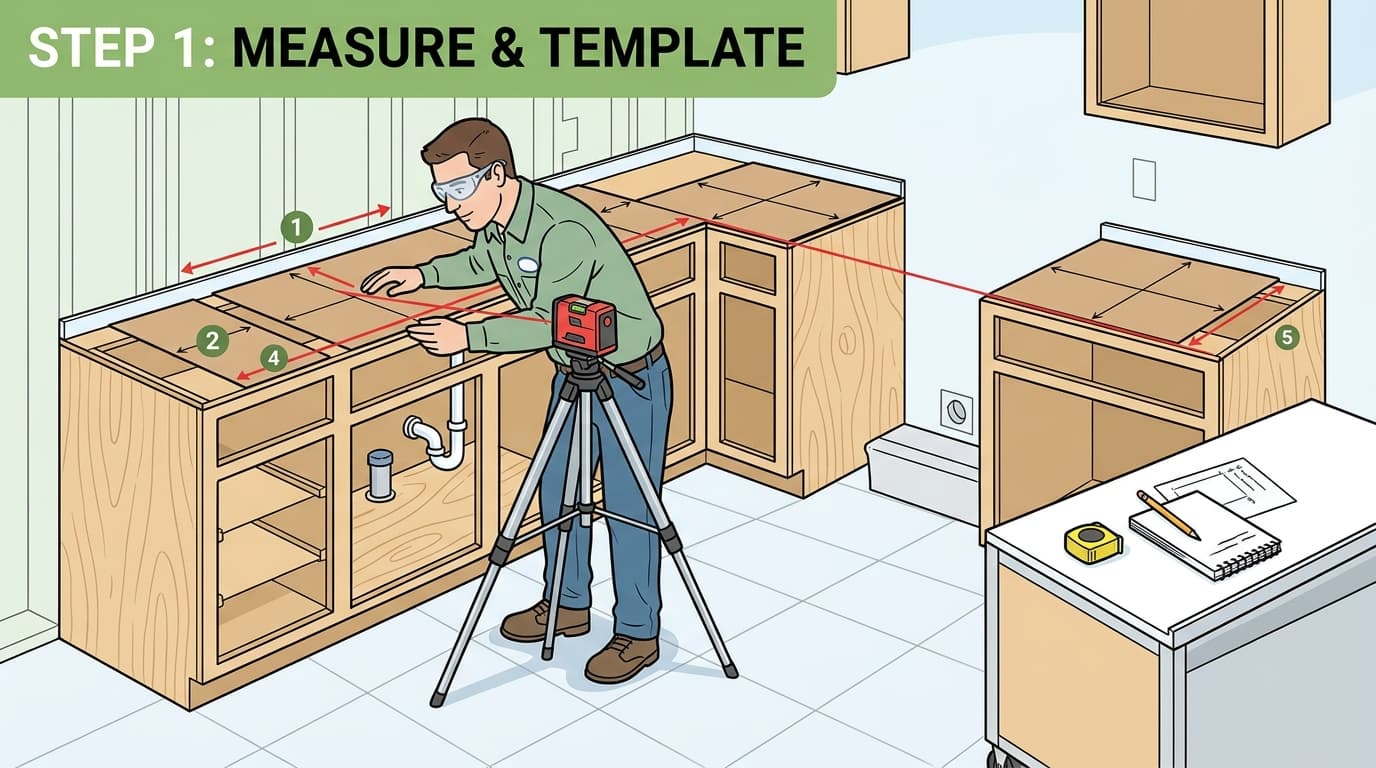
How to Prepare Your Kitchen for Countertop Installation: The Ultimate Checklist
Step-by-step preparation guide for laser templating and install day. Learn how to clear base cabinets, coordinate plumbers, disconnect sinks, and ensure a flawless fit.
Read Guide