
Quartzite vs. Quartz Countertops: The Complete Durability, Heat & Care Guide
Written & Reviewed by AGS Stones Craftsmen
Master Stone Fabricators & Licensed Cabinet Contractors • Duluth, GA
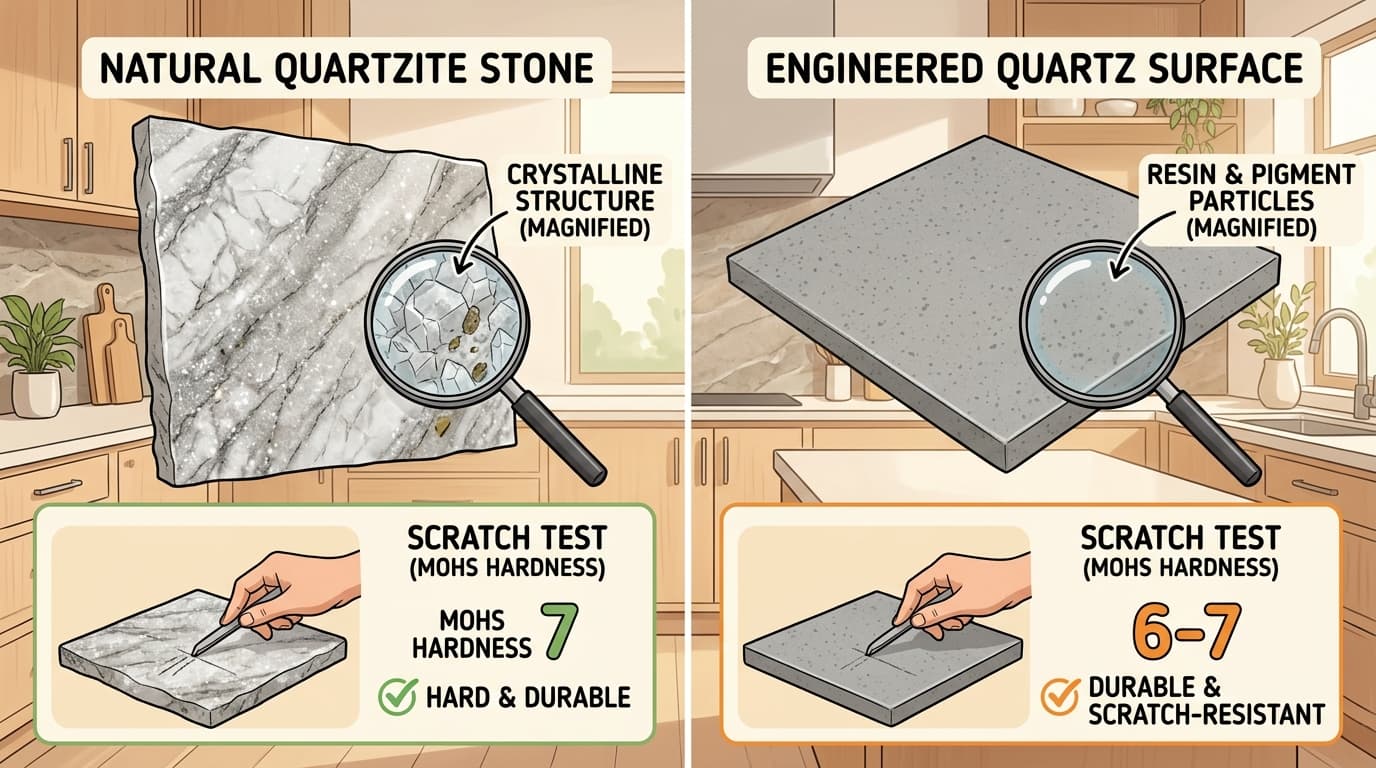
Key Takeaways: Quick Summary
- ✓Quartzite is 100% natural metamorphic rock quarried from tectonic sandstone (Mohs hardness 7-8), whereas Quartz is an engineered man-made composite of 90-93% crushed mineral bound by polymer resins and pigments (Mohs hardness 6-7).
- ✓Heat Resistance Difference: Natural quartzite easily handles screaming hot 1,000°F pots and baking trays directly off the burner. Engineered quartz can suffer irreversible resin scorching or yellow ring discoloration above 300°F.
- ✓Sealing & Porosity: True quartzite is porous natural stone requiring penetrating fluoropolymer sealer every 12 to 24 months. Engineered quartz is virtually non-porous and never requires any sealer.
- ✓The Pro Glass Scratch Test: Authentic quartzite will effortlessly gouge a glass bottle like a glass cutter. If the stone powders or scratches itself, it is soft marble or dolomite, not true quartzite.
- ✓The 15-Minute Lemon Acid Test: Pure quartzite does not react to acidic vinegar or citrus juice. If lemon juice leaves a cloudy, dull etched circle, the slab contains calcium carbonate and is mislabeled marble.
- ✓Budget & Investment: In Metro Atlanta, engineered quartz ranges from $55 to $115 per sq. ft. installed. Rare natural quartzites (such as Taj Mahal, Mont Blanc, Sea Pearl) range from $85 to $165+ per sq. ft. due to extreme diamond-tooling diamond blade fabrication costs.
If you are shopping for new kitchen countertops in Metro Atlanta, you have undoubtedly encountered two names that sound nearly identical: Quartzite and Quartz. Despite sharing the root mineral quartz, these two countertop materials could not be more different in how they are born, how they perform under heat, and how they must be cared for.
One is a 100% organic metamorphic stone forged over millions of years by intense subterranean heat and tectonic pressure. The other is a high-tech engineered composite crafted in manufacturing plants by binding crushed mineral crystals with polymer resins and artistic pigments. At AGS Stones & Cabinets in Duluth and Alpharetta, GA, our master fabricators cut both materials daily. This illustrated wikiHow-style guide breaks down the science, the durability tests, and the exact decision framework to choose the ideal surface for your home.
Natural Quartzite vs. Engineered Quartz at a Glance
| Feature | Natural Quartzite (e.g. Taj Mahal) | Engineered Quartz (e.g. Silestone, Cambria) |
|---|---|---|
| Material Origin | 100% Natural quarried metamorphic rock | Man-made composite (90-93% stone + 7-10% resin) |
| Mohs Hardness | 7 to 8 (Harder than granite & knife blades) | 6 to 7 (Hard, but resin can be scratched by hard steel) |
| Heat Tolerance | 1,000°F+ (Volcanic heat resistance) | 300°F max (Polymer resin scorches/yellows) |
| Sealing Required? | Yes, annually (Micro-porous stone) | Never (Zero-porosity factory surface) |
| Acid & Lemon Etching | Immune if 100% pure quartzite | Immune to household kitchen acids |
| Outdoor BBQ Kitchen Use | Excellent (UV-proof & weather-proof) | Not recommended (UV rays discolor resin) |
| Atlanta Installed Price | $85 – $165+ / sq. ft. | $55 – $115 / sq. ft. |
Method 1: The Glass Scratch Test (How to Spot Fake Quartzite)
In the natural stone trade, mislabeling is a well-known risk. Soft stones containing calcium carbonate—such as Super White or Fantasy Brown—are often sold as "soft quartzite," but geologically they are dolomitic marbles. If you install them thinking they are indestructible quartzite, acidic lemon juice will leave permanent dull spots on day one. Here is the foolproof wikiHow scratch test to verify real quartzite:
Obtain a Rough Sample Tile or Edge Scrap
Ask your stone supplier or our team at AGS Stones for a small rough sample or unpolished edge piece from the exact slab lot you are evaluating. You need a sharp unrounded stone corner.
Score Across an Ordinary Glass Bottle or Glass Tile
Grab an empty glass beverage bottle or a scrap glass tile. Press the sharp corner of your stone sample firmly against the glass surface and pull across in a continuous dragging motion.
Inspect the Glass Under Raking Light
Wipe away any dust. Feel the line with your fingernail. If you can physically feel the gouge caught by your nail, your stone possesses true quartz hardness (Mohs 7+), guaranteeing high scratch resistance in daily kitchen use.
Method 2: The 15-Minute Lemon Juice Acid Test
Pure natural quartzite is chemically inert to typical kitchen acids (vinegar, lemon juice, salsa, red wine). Calcitic marble and dolomite, conversely, chemically dissolve upon contact with acid—a process called chemical etching that permanently strips the glossy finish.
Apply Acid Drops
Squeeze fresh lemon juice or pour a teaspoon of white distilled vinegar directly onto the polished face of the stone sample.
Wait 15 to 20 Minutes
Let the puddle sit undisturbed at room temperature. Listen closely: if you hear faint fizzing or see micro-bubbles, calcium carbonate is actively reacting.
Wipe & Inspect Reflection
Wipe the stone clean with a wet towel and dry it. Tilt the slab under an overhead light. If the reflection is identical, it is 100% pure quartzite! If you see a cloudy, dull ring, it is marble.
Method 3: Heat Resistance Realities (Pots, Pans & Baking Sheets)
This is where natural stone and engineered surfaces diverge drastically. Homeowners who love high-heat searing, cast-iron cooking, and baking must understand the physical constraints of each material:
Quartzite formed under volcanic conditions exceeding 1,500°F. Setting a 450°F Dutch oven or a sizzling roasting pan directly onto a quartzite island will not scorch, bubble, melt, or burn the stone.
Pro Tip: While the stone will not melt, sudden thermal shock on cold winter mornings can occasionally trigger micro-fractures along natural fissures. Using silicone mats remains wise practice.
Engineered quartz contains 7% to 10% polymer epoxy and acrylic resins. Above 300°F, these plastic binders can chemically melt, leaving a permanent yellow or brown charred ring that cannot be polished or buffed out.
Critical Rule: Never place hot pots, air fryer baskets, slow cookers, or electric griddles directly onto engineered quartz without heat-resistant trivets.
Method 4: Everyday Maintenance & Sealing Protocol
Routine care dictates how fresh your countertops look 10 years from now. Follow these factory-tested maintenance steps:
Caring for Natural Quartzite (Sealing Required)
Because natural quartzite is slightly porous, apply a premium fluoropolymer penetrating impregnating sealer once every 12 to 18 months. Clean daily with warm water and pH-neutral soap or specialized stone sprays. Learn more in our companion guide on How to Clean & Seal Natural Stone Countertops.
Annual Sealing Required: ~15 minutes of easy DIY effortCaring for Engineered Quartz (Zero Sealing)
Engineered quartz is completely non-porous. Never apply stone sealers or topical waxes, which will create a greasy, hazy smudge on the resin surface. For tough stains like dried turmeric, ink, or wine, read our step-by-step Guide to Removing Stains from Quartz Countertops.
Zero Sealing Ever: Wipe with soft microfiber and mild soapMethod 5: Pricing & Cost Analysis in Atlanta & Duluth, GA
Understanding the real installed cost helps you allocate your kitchen renovation budget without unexpected surprises:
For an average 55 sq. ft. Metro Atlanta kitchen with a center island, turnkey quartz fabrication and installation typically ranges between $3,000 and $6,200, including sink cutouts and standard eased edges.
- Entry Level: Clean solid whites, sparkling grays ($55 - $70/sqft)
- Mid-Tier: Subtle Carrara marble vein styles ($75 - $95/sqft)
- Premium Brand: Bold bookmatched Calacatta Gold ($100 - $115+/sqft)
For that same 55 sq. ft. kitchen, luxury quartzite installed ranges between $4,800 and $9,200+. The higher cost reflects exotic quarry rarity, international shipping, and specialized diamond-tool waterjet cutting labor.
- Standard Quartzite: White Macaubas, Perla Venata ($85 - $110/sqft)
- Luxury Iconic: Premium Brazilian Taj Mahal ($115 - $145/sqft)
- Exotic Masterpieces: Blue Macaubas, Cristallo, Sea Pearl ($150 - $180+/sqft)
*Want an exact quote for your exact layout? Check our Atlanta Countertop Cost & Budget Breakdown Guide or get a Fast 3-Minute Online Estimate.
Method 6: The Final Decision Checklist (Which Fits Your Lifestyle?)
Choose Engineered Quartz If:
- ✓ You want zero annual maintenance or sealing ever.
- ✓ You prefer uniform, consistent pattern without natural stone variations.
- ✓ You are remodeling a rental property, Airbnb, or family home with young kids.
- ✓ Your countertop budget is under $5,000 for standard dimensions.
- ✓ You want modern waterfall edge islands with seamless mitered corners.
Choose Natural Quartzite If:
- ✓ You want a 100% unique natural organic masterpiece that no other kitchen in the world has.
- ✓ You are an avid cook who sets hot cast-iron pans and baking sheets near the stove.
- ✓ You adore the luxury crystalline look of marble (like Calacatta) but demand extreme durability.
- ✓ You are planning an outdoor BBQ kitchen that will receive direct Georgia sunlight and UV rays.
- ✓ You want maximum luxury resale appraisal value in Alpharetta, Buckhead, or Johns Creek.
Touch Real Quartzite & Quartz Slabs Side-by-Side!
Don't choose your home's centerpiece from a computer screen. Visit our showroom at 4579 Abbotts Bridge Rd Suite -10 in Duluth, GA. Compare 300+ full slabs of genuine Brazilian Taj Mahal quartzite and Calacatta quartz under professional lighting with free expert design consultations.
Serving the Greater Metro Atlanta Community
AGS Stones & Cabinets provides factory-direct fabrication, laser templating, and professional stone installation across all surrounding Georgia neighborhoods:
Common Questions from Homeowners
Can you put hot pots directly on quartzite countertops?+
Yes. Natural quartzite was forged deep beneath tectonic plates at temperatures exceeding 1,500°F. Placing hot Dutch ovens or boiling baking pans directly onto quartzite will not melt or discolor the stone (unlike engineered quartz, whose synthetic polymer binders scorch and burn above 300°F). However, stone fabricators still recommend using silicone trivets to eliminate micro-fissure thermal shock.
Does quartzite stain easily compared to engineered quartz?+
Natural quartzite has microscopic pores that can absorb standing red wine, coffee, or cooking grease if left untreated. However, when sealed with a quality penetrating impregnating sealer once a year, quartzite resists staining as effectively as dense granite. Engineered quartz is 100% non-porous and inherently resists liquid stains without ever needing sealers.
How can I test if a slab at the stone yard is real quartzite or marble?+
Many suppliers inadvertently mislabel soft calcitic stones (like Super White Dolomite or Fantasy Brown) as quartzite. Conduct two simple wikiHow tests: The Glass Scratch Test (authentic quartzite slices a glass bottle like a diamond) and the Lemon Juice Acid Test (pure quartzite never fizzes or etches after 15 minutes of lemon exposure).
Why is quartzite more expensive than granite or quartz?+
Quartzite rates 7 to 8 on the Mohs hardness scale—harder than a steel nail and harder than granite. Quarrying, transporting, and diamond-cutting these slabs requires specialized high-pressure waterjet CNC saws, slow feed rates, and expensive diamond segment blades. That extra fabrication labor and blade wear raises the installed price.
Why is Taj Mahal Quartzite so popular in Atlanta and Alpharetta luxury homes?+
Taj Mahal is an exceptionally dense, pure quartzite quarried in Brazil. It features warm creamy ivory and golden crystalline veins that replicate the coveted aesthetic of Italian Calacatta marble, but with extreme scratch, acid, and heat durability that easily withstands busy family kitchens and holiday entertaining.
Ready to Experience the AGS Stones Difference?
Skip the retail middlemen. Visit our Duluth showroom to hand-select your exact full-size stone slabs, or schedule a free in-home digital laser templating estimate.
Explore Related Services & Local Guides
Core Fabrication Services
Local Service Hubs
Remodeling Guides
- → How to Clean and Seal Granite Countertops: The Step-by-Step Care Guide
- → Granite vs. Quartz: Which Stone Does Your Kitchen Actually Need?
- → How to Prepare Your Kitchen for Countertop Installation: The Ultimate Checklist
- → How to Clean & Care for Custom Cabinets: Keeping Finishes Like New
- → How to Measure Countertops for a Fast & Accurate Estimate: Step-by-Step
- → How Much Do Granite & Quartz Countertops Cost in Atlanta & Duluth, GA?
- → How to Choose the Best Countertop Edge Profile: Eased, Bullnose, Ogee & Waterfall Guide
- → How to Fix a Chip in Granite or Quartz Countertops: The DIY Repair Guide
- → How to Remove Stains from Quartz Countertops: The Complete wikiHow Guide
- → How to Match Countertops with Cabinets: The Complete Designer Guide
- ✦ Return to All Guides & How-Tos
Related How-To Guides
Continue learning with more step-by-step homeowner tutorials
How to Clean and Seal Granite Countertops: The Step-by-Step Care Guide
Step-by-step wikiHow-style guide to cleaning, sanitizing, and sealing natural granite. Master the water droplet test, remove stubborn water rings, and protect your stone factory-fresh.
Read Guide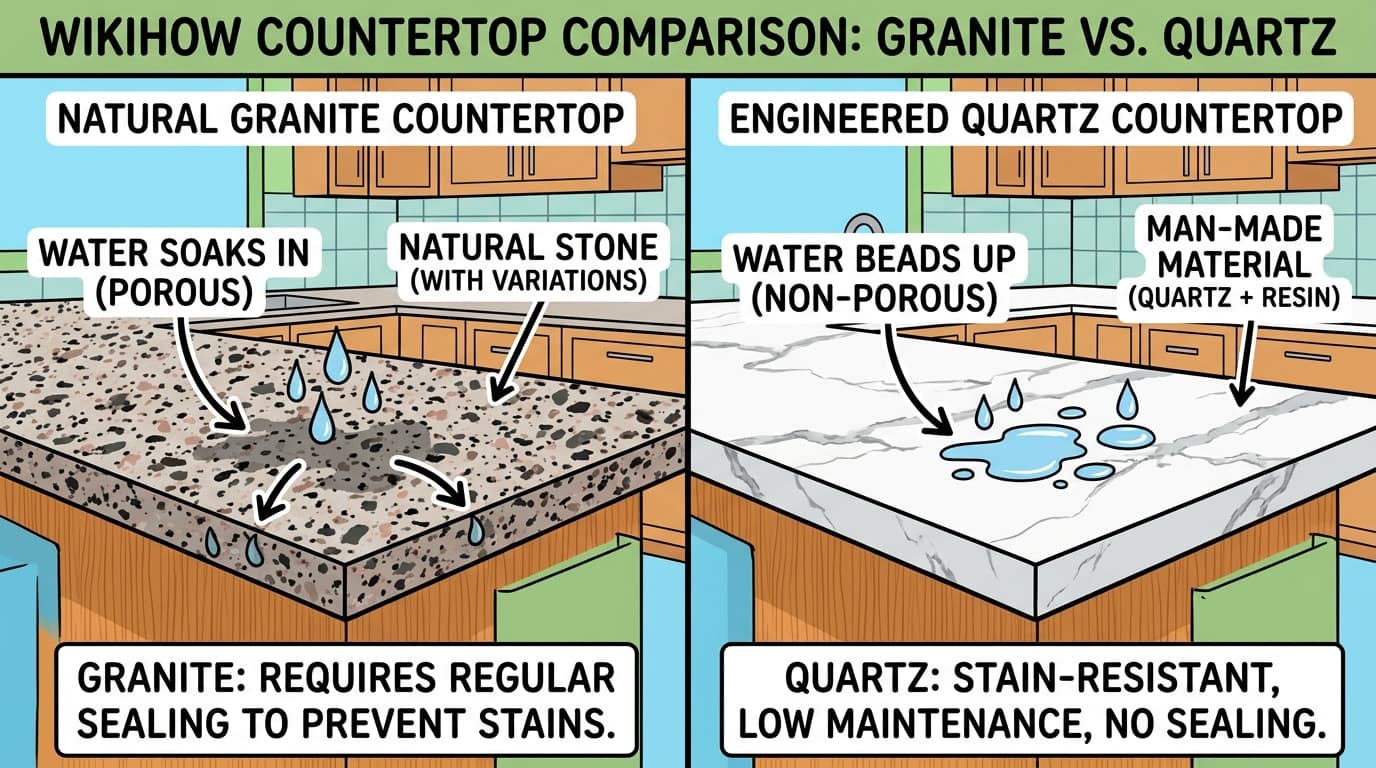
Granite vs. Quartz: Which Stone Does Your Kitchen Actually Need?
Confused between natural granite and engineered quartz? Learn the real differences in heat resistance, daily maintenance, seam visibility, and price per square foot.
Read Guide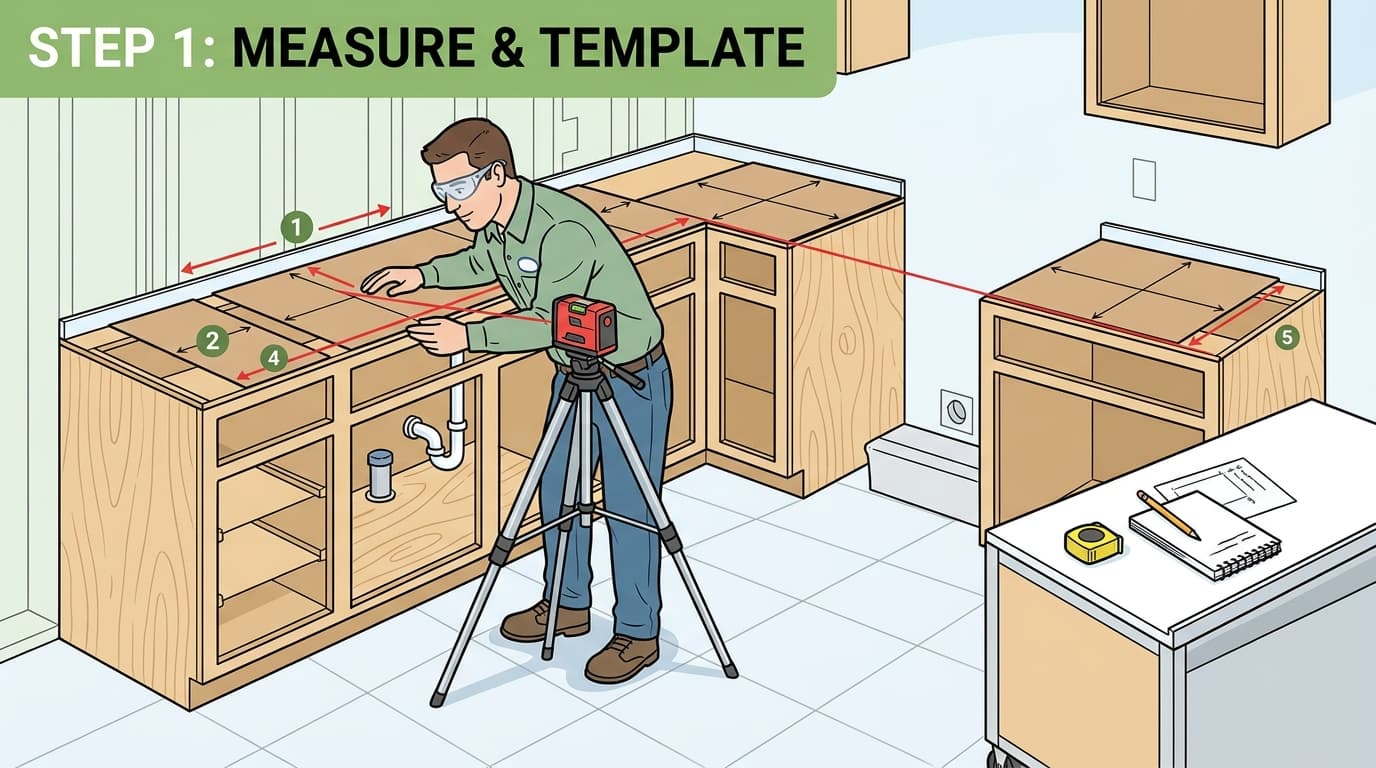
How to Prepare Your Kitchen for Countertop Installation: The Ultimate Checklist
Step-by-step preparation guide for laser templating and install day. Learn how to clear base cabinets, coordinate plumbers, disconnect sinks, and ensure a flawless fit.
Read Guide