
Waterfall Countertop Island Guide: How 45° Mitered Edges Work, Vein Cascading, Support & Costs
Written & Reviewed by AGS Stones Craftsmen
Master Stone Fabricators & Licensed Cabinet Contractors • Duluth, GA
Key Takeaways: Quick Summary
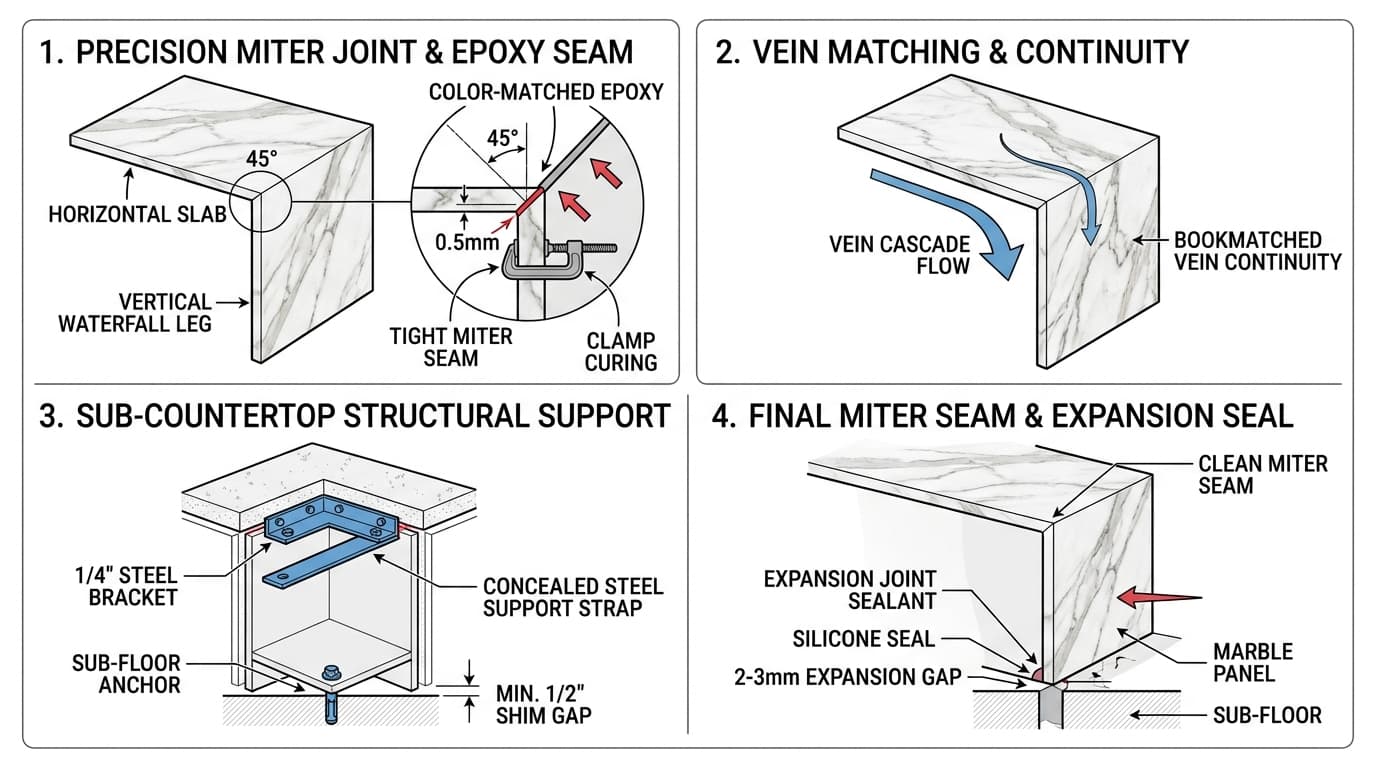
- ✓A waterfall countertop island extends the stone vertically down one or both sides to the floor, connected by a 45-degree precision miter joint bonded with color-matched knife-grade epoxy.
- ✓Vein flow continuity requires bookmatched or consecutively numbered slabs from the same bundle; master CNC saws cut adjacent horizontal and vertical pieces from a single continuous stone sequence.
- ✓Waterfall legs require a 2mm to 3mm flexible silicone expansion gap at the finished floor to protect the stone from subfloor deflection, foundation settling, and mopping moisture.
- ✓Barstool seating on a waterfall island requires recessed 1/4-inch structural steel L-brackets or flat steel support bars concealed under the overhang to prevent tipping and eliminate bulky corbels.
- ✓Adding a waterfall edge typically costs $1,200 to $2,500 per vertical drop in Metro Atlanta (including extra slab footage, 45° CNC miter cuts, hand-polishing, and structural floor leveling).
The Anatomy of a Waterfall Countertop Island: Precision Miters & Vein Flow
A waterfall countertop—where stone drops vertically down the side of a kitchen island all the way to the floor—has become the crown jewel of modern and transitional homes across Buckhead, Alpharetta, Milton, and Sandy Springs. But behind that effortless, flowing beauty lies complex stone engineering, sub-millimeter CNC cutting, and hidden structural reinforcement.
⚡ Quick Rule of Thumb for Homeowners
- Always Demand a 45-Degree Miter Joint: Never accept a flat "butt joint" on a waterfall edge. A true 45° miter allows dramatic veins in Calacatta quartz or quartzite to cascade organically down the corner without an awkward horizontal seam line.
- Reserve Enough Slab Square Footage: A standard 36-inch tall island waterfall leg requires an additional 12 to 18 square feet of stone per side. Most waterfall islands require two or three consecutively numbered slabs from the same stone bundle to ensure exact vein flow matching.
- Incorporate a Floor Expansion Joint: Stone expands and contracts differently than hardwood or tile. A 2mm to 3mm flexible silicone joint at the floor prevents floor settling stress from cracking your vertical stone leg.
Waterfall Island vs. Traditional Overhang Island: Side-by-Side Breakdown
To help you determine whether a waterfall edge fits your lifestyle, budget, and layout, here is how a waterfall island compares to a traditional finished-wood end panel:
| Design & Structural Factor | 1. Waterfall Island (45° Mitered) | 2. Traditional Island (1.5" Overhang) |
|---|---|---|
| Visual Impact & Luxury Vibe | High-end architectural focal point; continuous vein cascade makes kitchen feel custom-built. | Classic, timeless look; showcases custom cabinet end panels and Shaker millwork. |
| Cabinet End Protection | 100% impenetrable stone barrier against pet claws, vacuum scuffs, and foot kicks. | Painted or stained wood end panels are vulnerable to scratches and moisture damage over time. |
| Corner Seam Geometry | Precision 45-degree miter cut with color-matched epoxy adhesive (0.5mm hairline joint). | Standard polished edge profile (Eased, Demi-Bullnose, Ogee) with 1.5" overhang past cabinet. |
| Stone Material Required | Requires 2 to 3 slabs from consecutive lot bundles to ensure continuous grain matching. | Requires only 1 to 2 slabs depending on overall island length and width. |
| Electrical Outlets Placement | Requires low-profile pop-up countertop grommets or under-counter apron plug strips (Plugmold). | Standard junction box easily cut into the wood side panel of the cabinet. |
| Added Investment | +$1,200 to +$2,500 per leg (includes material, CNC miter labor, polishing & floor anchoring). | Standard base pricing with zero additional waterfall fabrication charges. |
| Best Architectural Fit | Modern luxury estates, European transitional, open-concept floorplans in Buckhead & Alpharetta. | Traditional colonial, craftsman bungalows, classic farmhouse kitchens in Roswell & Marietta. |
Method 1: The Anatomy of a 45-Degree Precision Miter Joint
The difference between a luxury, magazine-worthy waterfall island and a botched installation comes down to how the horizontal countertop connects to the vertical side drop:
✓ The Master Standard: 45° Miter Joint
Both the horizontal countertop slab and the vertical waterfall panel are beveled at an exact 45-degree angle using 5-axis CNC bridge saws. When joined, they form a crisp 90-degree corner with an almost invisible 0.5mm seam.
- Vein Preservation: The veining cascades uninterrupted over the bevel edge.
- Color-Matched Epoxy: Master fabricators hand-tint clear acrylic or knife-grade epoxy to match the background mineral colors.
- Micro-Chamfer: The sharp tip is subtly softened with a 1/16" micro-bevel to prevent chipping.
✗ The Cheap Shortcut: 90° Butt Joint
Inexperienced fabricators often take a flat slab and butt it directly under the horizontal overhang. This is a telltale sign of cut-rate fabrication that ruins the look of expensive stone.
- Disrupted Veins: Creates an abrupt, disjointed seam line where veins terminate unnaturally.
- Exposed Edge Profile: The top edge of the vertical slab is exposed to moisture and dirt.
- Cheap Resale Perception: Home inspectors and luxury buyers in Atlanta recognize this as an amateur shortcut.
Method 2: How We Cascade Veins Across the Island Corner
When clients walk into our Duluth showroom and gaze at a Calacatta Gold waterfall island, the most common exclamation is: "How does the vein wrap around the corner like real flowing liquid?"
This effect is achieved through rigorous mathematical layout and digital laser mapping:
Consecutive Bundle Slabs or True Bookmatching
When stone slabs are sliced from a quarry block (like bread in a bakery), they are numbered consecutively. In natural stone (quartzite and marble), slab #12 and slab #13 share near-identical mineral deposits. For engineered quartz, manufacturers create mirror-image "Bookmatched A and B" slabs specifically designed for seamless waterfall applications.
Single Continuous Slab Cut (When Island Length Permits)
If your island is 8 feet long (96 inches) and our jumbo quartz slab is 130 inches long, we can cut the horizontal top AND the vertical waterfall leg from the exact same continuous piece of stone. The saw cuts the 45° angle, and the vertical piece literally folds downward 90 degrees with 100% molecular vein perfection!
Digital Laser CAD Layout Before Any Saws Touch Stone
At AGS Stones, our laser templaters digitize your island cabinets in your home, then import the 3D DXF model into our Slabsmith visualization software. You can see a photo-realistic 3D rendering of your exact slabs showing how every vein will cascade down the waterfall before a single diamond blade spins.
Method 3: Sub-Countertop Structural Support & Floor Expansion Gaps
A solid 3cm quartz or granite waterfall panel weighs between 180 and 260 pounds. It cannot simply "lean" against the side of a cabinet box.
🛡️ AGS Stones Structural Installation Protocol
Cabinet Sub-Base Anchoring & Leveling
Before the vertical stone panel is mounted, our team verifies that the island cabinetry is anchored into the concrete slab or floor joists with zero wobble. A cabinet that shifts even 1/16 of an inch will shear the miter epoxy joint.
Concealed 1/4" Structural Steel Corner Brackets
Inside the cabinet corner, we install heavy-gauge 1/4-inch powder-coated steel L-brackets bolted through the cabinet carcass into the stone backing. This locks the vertical leg and horizontal slab in an indestructible 90-degree mechanical vise.
2mm to 3mm Floor Expansion Gap (Never Direct Contact)
The bottom edge of the waterfall panel must never press directly into tile or hardwood flooring. Our installers place non-compressible composite shims to leave a precise 2mm to 3mm expansion gap, which is sealed with color-matched 100% silicone. This prevents floor moisture from wicking upward and absorbs seasonal subfloor expansion without cracking the stone.
Method 4: Integrating Barstool Seating & Outlets with Waterfall Edges
Two questions puzzle homeowners most when planning a waterfall island: "Where do people sit?" and "Where do the electrical outlets go to meet Georgia building code?"
Barstool Overhang with Waterfall Ends
You can easily incorporate a 12-to-15-inch seating overhang along the long side of the island. To do this, we extend the waterfall side legs past the cabinet boxes, creating a stunning "framed stone alcove" where barstools tuck away neatly.
Engineering Note: When an overhang exceeds 10 inches on 3cm stone, we rout and recess flat 1/2-inch structural steel support plates into the top of the cabinet sub-frame, keeping the stone 100% cantilevered without bulky knee-banging wooden corbels.
Georgia Electrical Code & Outlets
National and Georgia electrical codes (NEC) require at least one electrical receptacle on a kitchen island. Cutting an ugly plastic outlet faceplate through the center of a gorgeous waterfall stone leg is a huge design mistake!
Method 5: How Much Does a Waterfall Edge Add to Remodel Costs?
Because AGS Stones is a factory-direct fabricator with our own CNC machinery in Duluth, our pricing is completely transparent without retail designer commissions:
Additional Slab Footage
$500 – $1,200
Each 36" x 36" or 36" x 42" waterfall leg uses 10 to 14 sq ft of stone. Often requires purchasing a 2nd or 3rd matching bundle slab.
45° Miter & Edge Polish
$500 – $900
Covers 5-axis CNC diamond saw bevel cutting, hand seam grinding, and color-matched epoxy blending by master artisans.
Floor Anchoring & Leveling
$200 – $400
Includes concealed steel L-brackets, subfloor anchors, composite shims, and anti-vibration silicone expansion seal.
Method 6: See Full-Scale Waterfall Islands in Our Duluth Showroom
Photos on social media cannot convey the tactile grandeur of a perfectly mitered stone waterfall. At AGS Stones & Cabinets, our showroom at 4579 Abbotts Bridge Rd Suite -10 in Duluth features full-size operating kitchen islands with live waterfall displays:
The Hairline Seam Test
Run your hand directly across our 45-degree miter joints. Experience how our CNC saws and custom epoxy color matching create a joint smoother than a sheet of glass.
Hand-Select Your Jumbo Slabs
Walk our slab gallery to inspect Calacatta quartz, Taj Mahal quartzite, and exotic granites. We will tag consecutive bookmatched slabs reserved specifically for your home.
Guaranteed 5-Day Installation
From our digital laser templating appointment to final delivery and miter assembly in your home, our standard turnaround is just 5 business days!
Ready to Design Your Dream Waterfall Island?
Visit our Duluth, GA showroom or request an instant free digital laser estimate. Our stone artisans and 3D designers will map out your waterfall island with millimeter precision!
Serving the Greater Metro Atlanta Community
AGS Stones & Cabinets provides factory-direct fabrication, laser templating, and professional stone installation across all surrounding Georgia neighborhoods:
Common Questions from Homeowners
How much extra does a waterfall edge cost on a kitchen island in Atlanta?+
In Metro Atlanta, a single waterfall leg typically adds $1,200 to $2,500 to your total project cost. This covers the additional 12 to 18 square feet of stone slab material, precision 45-degree CNC bridge saw miter cutting, hand-edge honing and polishing, color-matched epoxy seam blending, and structural floor anchoring. When buying factory-direct from our Duluth shop, you avoid middleman markup.
Can you have barstool seating on an island with waterfall edges?+
Yes! You can have waterfall legs on both ends while maintaining a 12-to-15-inch seating overhang along the back side. The corner where the vertical waterfall leg meets the seating overhang is reinforced with internal 1/4-inch structural steel L-brackets or a return panel to ensure rigid lateral stability and prevent rocking.
What is the difference between a 45-degree mitered edge and a butt joint waterfall?+
A 45-degree miter joint cuts both the horizontal top and vertical drop at opposing 45-degree angles, creating a razor-thin, seamless seam where the stone pattern wraps organically around the corner. A butt joint (cheaper shortcut) places the vertical slab flat underneath the horizontal edge, leaving an exposed 90-degree seam line that visibly interrupts the vein flow.
Does a waterfall countertop protect kitchen cabinets from damage?+
Yes. Waterfall stone panels completely shield the ends of your island cabinetry from pet claws, vacuum cleaner scuffs, grocery bag bumps, and children kicking their shoes. They also provide a sleek visual screen that conceals dishwasher sides or trash pullout reveals from open-concept living rooms.
Which stone materials work best for waterfall countertops?+
Engineered quartz with bold Calacatta veining (like Calacatta Gold or Laza), natural quartzite (such as Taj Mahal or Mont Blanc), and Italian marble are the top choices because their dramatic flowing veins create a striking cascading waterfall effect. Solid or fine-grain stones can be used, but dramatic veining showcases the artisan miter craftsmanship best.
Ready to Experience the AGS Stones Difference?
Skip the retail middlemen. Visit our Duluth showroom to hand-select your exact full-size stone slabs, or schedule a free in-home digital laser templating estimate.
Explore Related Services & Local Guides
Core Fabrication Services
Local Service Hubs
Remodeling Guides
- → How to Clean and Seal Granite Countertops: The Step-by-Step Care Guide
- → Granite vs. Quartz: Which Stone Does Your Kitchen Actually Need?
- → How to Prepare Your Kitchen for Countertop Installation: The Ultimate Checklist
- → How to Clean & Care for Custom Cabinets: Keeping Finishes Like New
- → How to Measure Countertops for a Fast & Accurate Estimate: Step-by-Step
- → How Much Do Granite & Quartz Countertops Cost in Atlanta & Duluth, GA?
- → How to Choose the Best Countertop Edge Profile: Eased, Bullnose, Ogee & Waterfall Guide
- → How to Fix a Chip in Granite or Quartz Countertops: The DIY Repair Guide
- → How to Remove Stains from Quartz Countertops: The Complete wikiHow Guide
- → How to Match Countertops with Cabinets: The Complete Designer Guide
- → Quartzite vs. Quartz Countertops: The Complete Durability, Heat & Care Guide
- → Can You Put Hot Pans on Quartz Countertops? The WikiHow Heat Safety & Burn Repair Guide
- → Are Countertop Seams Normal? The Complete wikiHow Guide to Seam Placement, Hiding & Repair
- → How Far Can Countertops Overhang Without Support? The Complete wikiHow Island & Bar Bracket Guide
- → 2cm vs. 3cm Countertops: Which Thickness Should You Choose? (Plywood Subtop, Edge Profiles, Strength & Cost Guide)
- → Honed vs. Polished vs. Leathered Countertops: Which Stone Finish Is Best for Your Kitchen? (Texture, Cleaning, Fingerprints & Cost Guide)
- → Undermount vs. Farmhouse Sink with Quartz & Granite Countertops: The Complete Cutout, Reveal & Cabinet Support Guide
- ✦ Return to All Guides & How-Tos
Related How-To Guides
Continue learning with more step-by-step homeowner tutorials
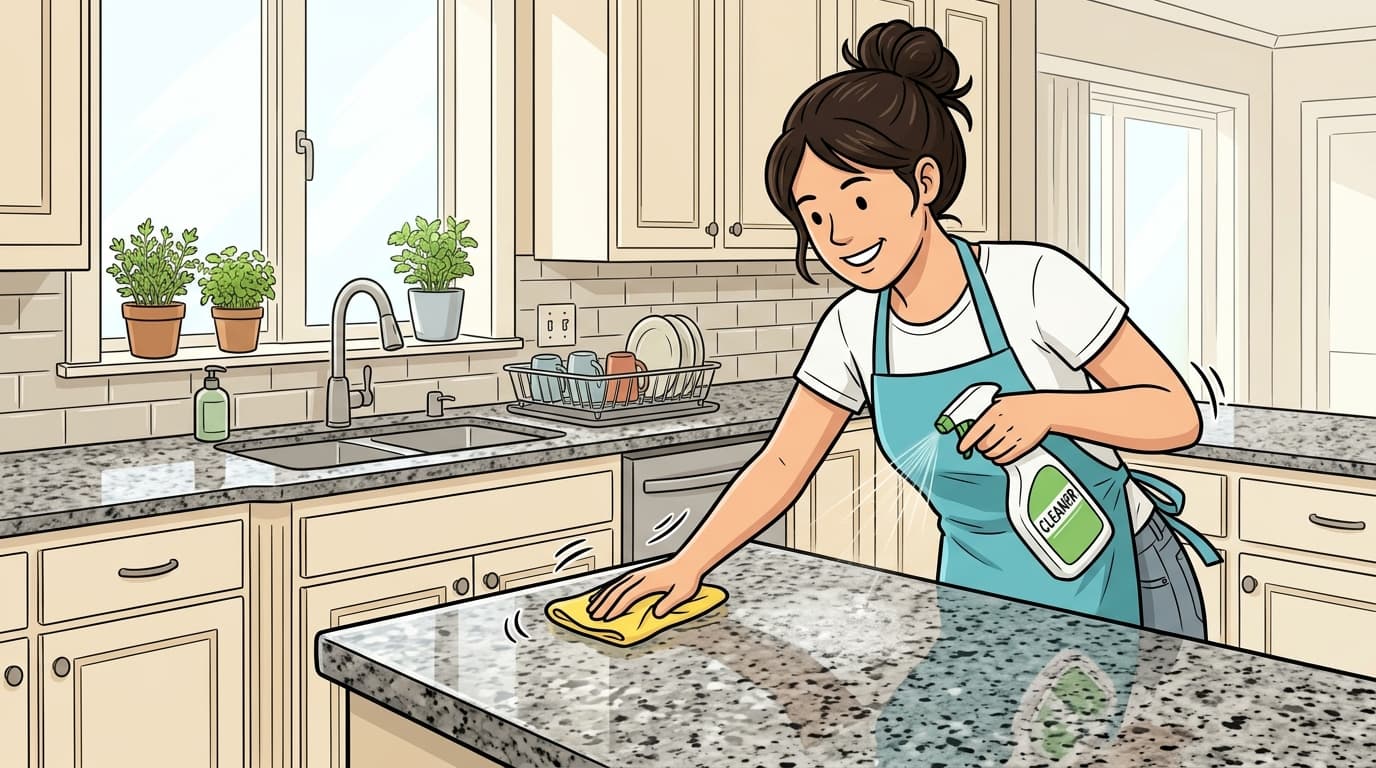
How to Clean and Seal Granite Countertops: The Step-by-Step Care Guide
Step-by-step wikiHow-style guide to cleaning, sanitizing, and sealing natural granite. Master the water droplet test, remove stubborn water rings, and protect your stone factory-fresh.
Read Guide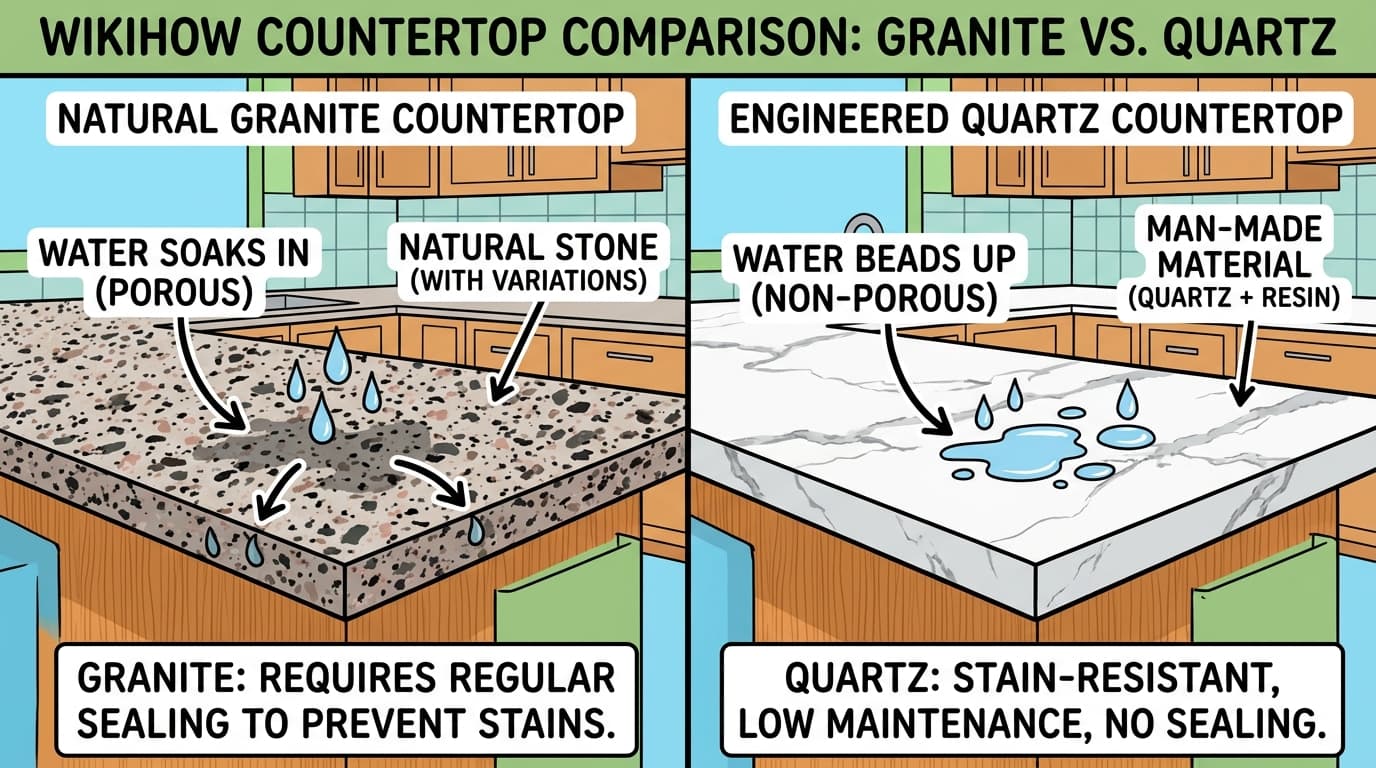
Granite vs. Quartz: Which Stone Does Your Kitchen Actually Need?
Confused between natural granite and engineered quartz? Learn the real differences in heat resistance, daily maintenance, seam visibility, and price per square foot.
Read Guide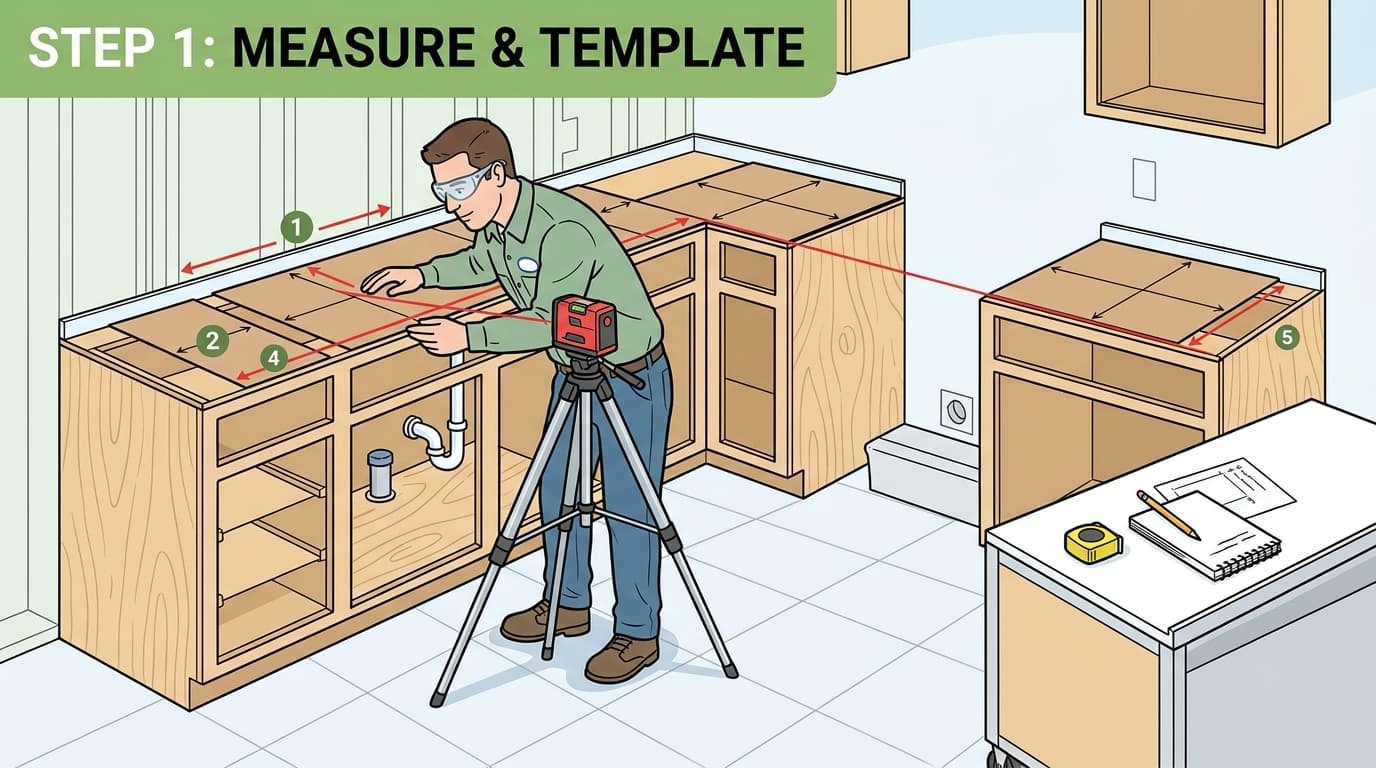
How to Prepare Your Kitchen for Countertop Installation: The Ultimate Checklist
Step-by-step preparation guide for laser templating and install day. Learn how to clear base cabinets, coordinate plumbers, disconnect sinks, and ensure a flawless fit.
Read Guide