
Full-Height Slab Backsplash vs. Tile: Quartz Behind Gas Stove Heat, Outlet Cutouts & Cost Guide
Written & Reviewed by AGS Stones Craftsmen
Master Stone Fabricators & Licensed Cabinet Contractors • Duluth, GA
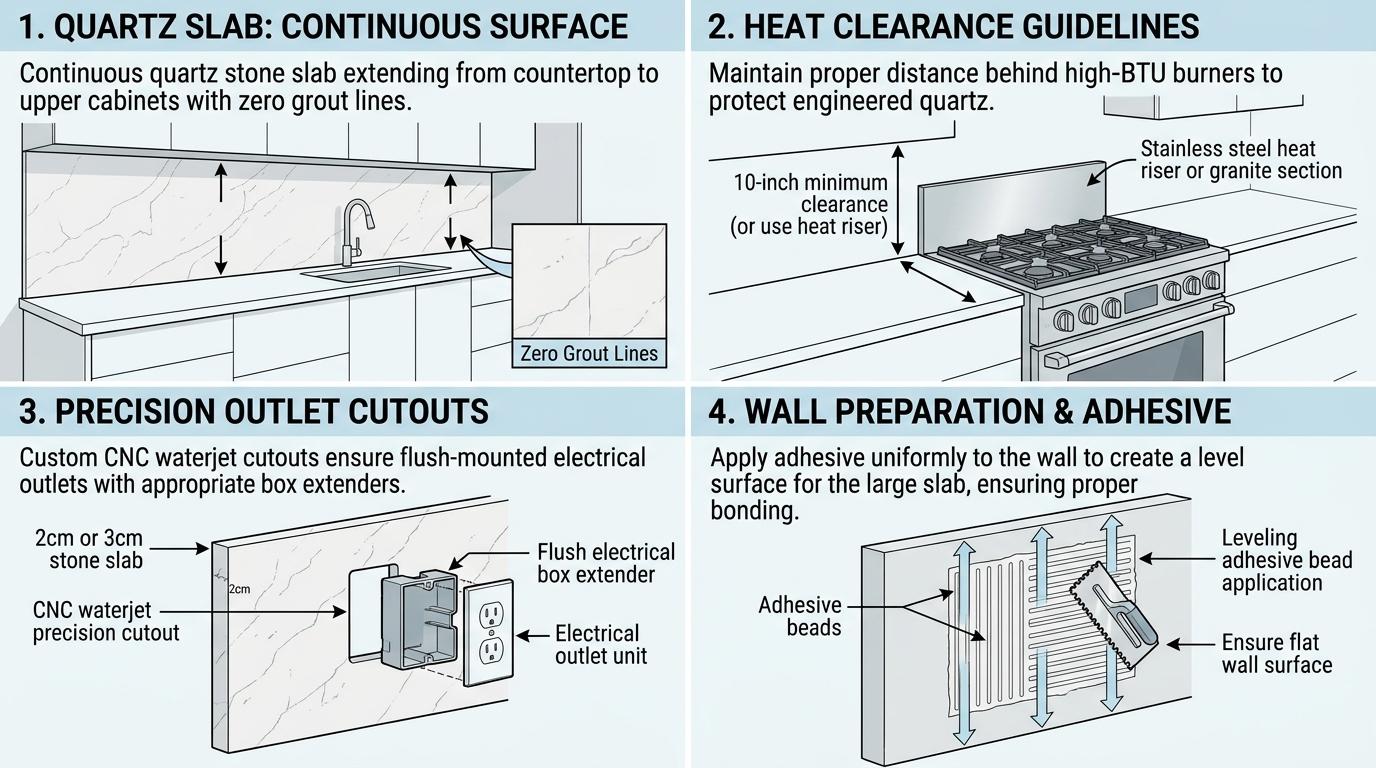
Key Takeaways: Quick Summary
- ✓Full-height quartz or granite slab backsplashes run seamlessly from countertop to upper cabinets or ceiling, eliminating 100% of greasy grout lines.
- ✓High-BTU commercial gas ranges (Thermador, Wolf, Viking) generate intense convective heat that can yellow resin in engineered quartz if closer than 10 inches; best practice is installing a 10-inch stainless steel backguard, natural granite/quartzite section, or keeping manufacturer-recommended clearances.
- ✓Electrical outlets require sub-millimeter precision CNC waterjet cutouts and NEC-approved electrical box extenders so switches and receptacles mount completely flush with 2cm or 3cm stone slabs.
- ✓Wall prep requires strict levelness: wavy drywall must be skimmed or planed flat before heavy vertical stone slabs (weighing 10–18 lbs/sqft) are bonded with structural mastic adhesive and color-matched silicone.
- ✓In Metro Atlanta (Buckhead, Alpharetta, Milton, Sandy Springs, Johns Creek), full slab backsplashes cost between $65 and $125 per square foot installed, delivering dramatic luxury resale value compared to traditional ceramic tile.
Full-Height Slab Backsplash vs. Tile: The Zero-Grout Luxury Transformation
In high-end kitchen remodels across Buckhead, Alpharetta, Milton, and Johns Creek, the traditional 4-inch stone strip or subway tile backsplash is rapidly being replaced by continuous full-height stone slabs. Carrying your quartz, quartzite, or granite straight up from the countertop to the underside of the upper cabinets or range hood creates a clean, monolithic European look. But before you fabricate, understanding heat clearances, outlet cutouts, and wall prep is essential.
⚡ Quick Rule of Thumb for Homeowners
- Choose Full-Height Slab Backsplash: If you despise scrubbing greasy tomato sauce and curry oils out of porous grout lines, love uninterrupted vein matching, and want a dramatic high-end architectural statement.
- Pay Attention to High-BTU Gas Ranges: If your kitchen features a powerful 18,000+ BTU gas cooktop (Wolf, Viking, Thermador), ensure at least 2.5" to 3" of clearance between rear burners and quartz stone, or incorporate a stainless steel heat shield riser to protect engineered resins from thermal shock.
- Plan Electrical Locations During Templating: Because diamond waterjets cut your slab in our Duluth factory, electrical boxes cannot be moved after the stone is cut. Finalize all under-cabinet plug strips or outlet positions before templating day.
Full-Height Stone Slab vs. Traditional Tile Backsplash: Side-by-Side Breakdown
Before deciding between a solid stone slab or traditional ceramic tile, examine how both materials compare across daily maintenance, cooking hygiene, aesthetics, and total project timeline:
| Performance Factor | 1. Full-Height Stone Slab | 2. Traditional Ceramic / Subway Tile |
|---|---|---|
| Grout Lines & Cleaning | Zero grout lines. Single swipe with a damp microfiber cloth removes grease splatters instantly. | Hundreds of porous grout lines that absorb cooking oil, grease, and smoke stains requiring regular tooth-brush scrubbing and annual sealing. |
| Aesthetic Impact | Dramatic luxury focal point. Calacatta or Taj Mahal veins climb vertically up the wall behind the range hood. | Classic, familiar look; can feel visually busy or fragmented in open-concept transitional kitchens. |
| High-Heat Tolerance Behind Gas Range | Granite/Quartzite: 100% heat-proof. Quartz: Requires 10" stainless riser or proper clearance from 18,000+ BTU gas burners. | Ceramic and porcelain tiles withstand open heat easily, though grout seams near burners can discolor. |
| Installation Turnaround | Installed in just 2 to 3 hours alongside countertops by our AGS single-source team. Ready for use next day. | Requires separate tile sub-contractor: day 1 setting tile, day 2 drying, day 3 grouting, day 4 caulking and sealing. |
| Electrical Outlet Finish | Precision CNC waterjet cuts in factory; box extenders create perfectly flush luxury switchplates. | Cut on-site with manual wet tile saw; edges can be jagged or chip behind cover plates. |
| Installed Cost Range (Atlanta) | $65 – $125 / sq ft installed (inclusive of stone slab, CNC cutouts, edge polishing, adhesive & labor). | $25 – $55 / sq ft total ($10–$20 tile + $15–$35 tile contractor installation & grouting labor). |
| Best Architectural Fit | Modern farmhouse, European transitional, luxury contemporary estates in Buckhead, Milton & Alpharetta. | Traditional colonial, craftsman cottages, historic bungalow renovations in Decatur & Marietta. |
Method 1: The Gas Stove Heat Clearance Rule (Protecting Quartz Resin)
The single most critical question homeowners ask when planning a full stone backsplash is: "Will the heat from my gas stove damage a quartz slab backsplash?"
The answer depends entirely on your cooktop technology and stone material:
🔥 Commercial Gas Burners vs. Quartz
Engineered quartz consists of 90–93% natural crushed quartz stone and 7–10% polymeric resins. While quartz handles normal cooking with ease, heavy-duty commercial gas ranges (such as Thermador, Wolf, BlueStar, or Viking) output up to 20,000 to 25,000 BTUs per burner.
When a large stockpot sits on a rear gas burner, convective flames channel concentrated heat directly against the rear wall. Continuous temperatures above 300°F (150°C) can cause polymer resin scorching, micro-cracking, or yellow discoloration.
✓ 3 Pro Solutions for Gas Stoves
- 1. Stainless Steel Heat Riser Backguard: Install the range manufacturer's matching 5" to 10" stainless steel island trim or backguard riser directly behind the burners before the quartz slab begins.
- 2. Natural Granite or Quartzite: Unlike engineered quartz, 100% natural stones like Taj Mahal quartzite, Mont Blanc, or Absolute Black granite were formed under volcanic heat and are immune to flame scorching.
- 3. Induction Cooktops: Induction ranges generate heat magnetically inside the pan only, producing zero wasted ambient flame heat and making them 100% safe for seamless quartz backsplashes.
Method 2: Electrical Outlets & Box Extenders in 2cm/3cm Stone
A standard kitchen wall contains 4 to 8 electrical duplex outlets, GFCIs, and under-cabinet light switches. On a tile backsplash, workers use pliers and hand grinders. On a 10-foot solid stone slab, cutting errors cannot be patched!
Sub-Millimeter Digital Laser Templating
During our digital templating appointment in your home, our Proliner laser maps the exact X, Y, and Z coordinates of every electrical rough-in box to within 1/16th of an inch.
CNC Waterjet Cutting in Our Duluth Factory
Back in our Duluth fabrication shop, our 60,000-PSI abrasive CNC waterjet slices clean, perfectly rectangular rectangular outlet ports with smooth micro-beveled inner edges. Zero hand-chipping, zero jagged edges.
NEC-Compliant Electrical Box Extenders
National Electrical Code (NEC 314.20) mandates that electrical boxes must not be set back more than 1/4 inch from non-combustible surfaces. Because 2cm or 3cm stone adds 3/4" to 1-1/4" of wall depth, we supply UL-listed box extenders (such as Arlington BE1 or Caterpillar shims). The outlet mounts rock-solid and flush with your finished stone face.
The Invisible Alternative: Under-Cabinet Plugmold Strips
For the purest architectural look in modern Alpharetta and Buckhead kitchens, we frequently recommend having your electrician wire angled multi-outlet strips (Plugmold) tucked underneath the upper cabinet light valance. This leaves your solid Calacatta quartz wall completely seamless with zero outlet cutouts interrupting the veining!
Method 3: Wall Flatness, Drywall Prep & Structural Bonding
A full-height quartz slab measuring 9 feet long by 18 inches tall weighs between 130 and 190 pounds. Installing stone vertically requires rigorous wall preparation:
📐 The AGS Stones Wall Preparation Protocol
Laser Wall Flatness Inspection
Walls in Georgia homes are rarely 100% plumb. Drywall mud buildup, warped 2x4 studs, and corner tape can bow outward by 1/4 inch or more. A rigid stone slab will rock or leave unsightly gaps if placed against an uneven wall. Our laser mapping flags all drywall hollows so they can be skimmed or shimmed flat before installation day.
Full-Coverage Structural Mastic & Epoxy Dabs
We apply heavy vertical beads of non-sagging, high-bond polyurethane construction adhesive (like Bostik or Liquid Nails Heavy Duty) spaced 4 to 6 inches apart, combined with fast-setting two-part stone epoxy dabs. This provides immediate mechanical grab while the permanent elastic adhesive cures.
Countertop-to-Backsplash Expansion Joint
Where the horizontal countertop slab meets the vertical backsplash, we leave a micro 1/16-inch expansion gap sealed with 100% neutral-cure silicone color-matched to your stone. This flexible gasket accommodates building settling and seismic vibration without cracking the stone joint.
Method 4: Should You Choose 2cm or 3cm for a Wall Slab?
While 3cm (1-1/4") is the universal standard for kitchen countertops in the Southeastern United States, wall backsplashes have unique dimensional requirements:
2cm (3/4") Slab Thickness
- 33% Lighter Weight: Weighs ~11 lbs/sqft compared to ~17 lbs/sqft for 3cm stone, placing minimal stress on drywall fasteners.
- Slimmer Profile: Tucks neatly behind standard window trim casings and under-cabinet under-lighting light rails without protruding past cabinet faces.
- Easier Electrical Integration: Standard electrical outlet box screws easily reach standard wall boxes.
3cm (1-1/4") Slab Thickness
- Zero Waste from Island/Perimeter Slabs: If your countertop order has leftover stone footage on a 3cm jumbo slab, using it for the backsplash saves purchasing an entire separate 2cm slab!
- Identical Edge & Vein Thickness: Provides a continuous, monolithic look with substantial depth along exposed ends.
- Requires Deep Window Sills: May require notch-cutting around window trim or custom end-cap returns.
Method 5: Cost Breakdown — Full Slab Backsplash vs. Tile in Atlanta
Because AGS Stones is a factory-direct fabricator with our own CNC waterjets in Duluth, we offer transparent pricing with zero middleman contractor markups:
Stone Slab Footage
$35 – $65 / sqft
Covers premium Calacatta quartz, Taj Mahal quartzite, or natural granite. Remnants from countertop slabs can drastically lower this cost!
Waterjet & Edge Polish
$20 – $35 / sqft
Includes 5-axis CNC waterjet cutting, outlet rectangular ports, range hood seam bookmatching, and polished perimeter edges.
Vertical Wall Installation
$15 – $25 / sqft
Covers wall laser leveling, high-strength structural mastic bonding, box extender fitting, and silicone expansion joint sealing.
Method 6: See Full-Height Backsplash Displays in Our Duluth Showroom
Photos cannot capture how light glances across an uninterrupted 10-foot polished stone wall. At AGS Stones & Cabinets, our showroom at 4579 Abbotts Bridge Rd Suite -10 in Duluth features full-size kitchen displays with live full-height slab backsplashes:
Inspect Outlet Precision
Examine our flush-mounted electrical cutouts and see how Plugmold under-cabinet strips keep stone surfaces completely pristine.
Pair with Custom Cabinets
Hold cabinet door samples (white Shaker, fluted oak, or painted navy) directly against full-size quartz slabs to verify tone and contrast.
Fast 5-Day Turnaround
From our digital laser templating appointment to final delivery and installation in your home, our standard turnaround is just 5 business days!
Ready to Upgrade to a Seamless Stone Backsplash?
Visit our Duluth, GA showroom or request an instant free digital laser estimate. Our stone specialists and 3D designers will map out your countertops and full-height backsplash with sub-millimeter perfection!
Serving the Greater Metro Atlanta Community
AGS Stones & Cabinets provides factory-direct fabrication, laser templating, and professional stone installation across all surrounding Georgia neighborhoods:
Common Questions from Homeowners
Can you put an engineered quartz slab backsplash directly behind a gas stove?+
Yes, provided proper heat clearances are maintained. Standard electric or induction cooktops generate zero open flame and are 100% safe with quartz backsplashes. However, high-BTU commercial-style gas burners (Wolf, Thermador, Viking) push intense heat toward the rear wall. If your gas range sits less than 2 to 3 inches from the wall without a rear riser, continuous 400°F+ burner heat can cause thermal yellowing of the polymer resins in quartz. We recommend installing the appliance manufacturer's 5-to-10-inch stainless steel backguard riser, selecting natural heat-proof quartzite/granite behind the cooktop, or leaving recommended clearance.
Is 2cm or 3cm stone thickness better for a full-height kitchen backsplash?+
2cm (approximately 3/4 inch) is the worldwide industry favorite for full-height wall backsplashes. It weighs about 33% less than 3cm stone (approx. 11 lbs/sqft vs. 17 lbs/sqft), rests flush behind standard window casings and upper cabinet under-light moldings, and places significantly less gravitational strain on drywall studs. However, if your kitchen uses 3cm countertops and there is leftover slab material, 3cm can also be installed with appropriate wall backing support.
How are electrical outlets and light switches cut into a solid stone backsplash?+
Unlike tile where installers snip small notches on-site with hand nippers, a solid slab backsplash requires digital laser templating of every outlet location. In our Duluth fabrication shop, high-pressure 5-axis CNC waterjets slice razor-clean rectangular cutouts through the stone. During installation, licensed electricians or our installers add plastic box extenders (caterpillars or Arlington extenders) so receptacle screws tighten flush against the stone surface.
How much does a full-height quartz slab backsplash cost installed in Atlanta?+
In Metro Atlanta, a full-height stone backsplash ranges from $65 to $125 per square foot fully installed. For an average 30-square-foot backsplash area, expect an investment of $2,000 to $3,800. While this is higher than basic $10–$25/sqft subway tile, it eliminates expensive tile contractor labor, saves 3 to 4 days of multi-step tile setting and grouting, and creates an uninterrupted luxury aesthetic that substantially boosts home appraisal value.
What happens if my kitchen drywall walls are bowed or uneven?+
Unlike tiny 3x6-inch subway tiles that can flex across bumpy drywall, a rigid 9-foot continuous stone slab cannot bend. Before installation, our digital laser scans verify wall plumb. Any severe drywall hollows or high studs are shimmed, planed, or skim-coated flat. This ensures the stone slab bonds uniformly with heavy-duty structural adhesive without air voids or stress points.
Ready to Experience the AGS Stones Difference?
Skip the retail middlemen. Visit our Duluth showroom to hand-select your exact full-size stone slabs, or schedule a free in-home digital laser templating estimate.
Explore Related Services & Local Guides
Core Fabrication Services
Local Service Hubs
Remodeling Guides
- → How to Clean and Seal Granite Countertops: The Step-by-Step Care Guide
- → Granite vs. Quartz: Which Stone Does Your Kitchen Actually Need?
- → How to Prepare Your Kitchen for Countertop Installation: The Ultimate Checklist
- → How to Clean & Care for Custom Cabinets: Keeping Finishes Like New
- → How to Measure Countertops for a Fast & Accurate Estimate: Step-by-Step
- → How Much Do Granite & Quartz Countertops Cost in Atlanta & Duluth, GA?
- → How to Choose the Best Countertop Edge Profile: Eased, Bullnose, Ogee & Waterfall Guide
- → How to Fix a Chip in Granite or Quartz Countertops: The DIY Repair Guide
- → How to Remove Stains from Quartz Countertops: The Complete wikiHow Guide
- → How to Match Countertops with Cabinets: The Complete Designer Guide
- → Quartzite vs. Quartz Countertops: The Complete Durability, Heat & Care Guide
- → Can You Put Hot Pans on Quartz Countertops? The WikiHow Heat Safety & Burn Repair Guide
- → Are Countertop Seams Normal? The Complete wikiHow Guide to Seam Placement, Hiding & Repair
- → How Far Can Countertops Overhang Without Support? The Complete wikiHow Island & Bar Bracket Guide
- → 2cm vs. 3cm Countertops: Which Thickness Should You Choose? (Plywood Subtop, Edge Profiles, Strength & Cost Guide)
- → Honed vs. Polished vs. Leathered Countertops: Which Stone Finish Is Best for Your Kitchen? (Texture, Cleaning, Fingerprints & Cost Guide)
- → Undermount vs. Farmhouse Sink with Quartz & Granite Countertops: The Complete Cutout, Reveal & Cabinet Support Guide
- → Waterfall Countertop Island Guide: How 45° Mitered Edges Work, Vein Cascading, Support & Costs
- → Best Countertops for Outdoor Kitchens: Granite vs. Quartzite vs. Quartz (UV Sunlight, Grill Cutouts & Georgia Climate)
- ✦ Return to All Guides & How-Tos
Related How-To Guides
Continue learning with more step-by-step homeowner tutorials
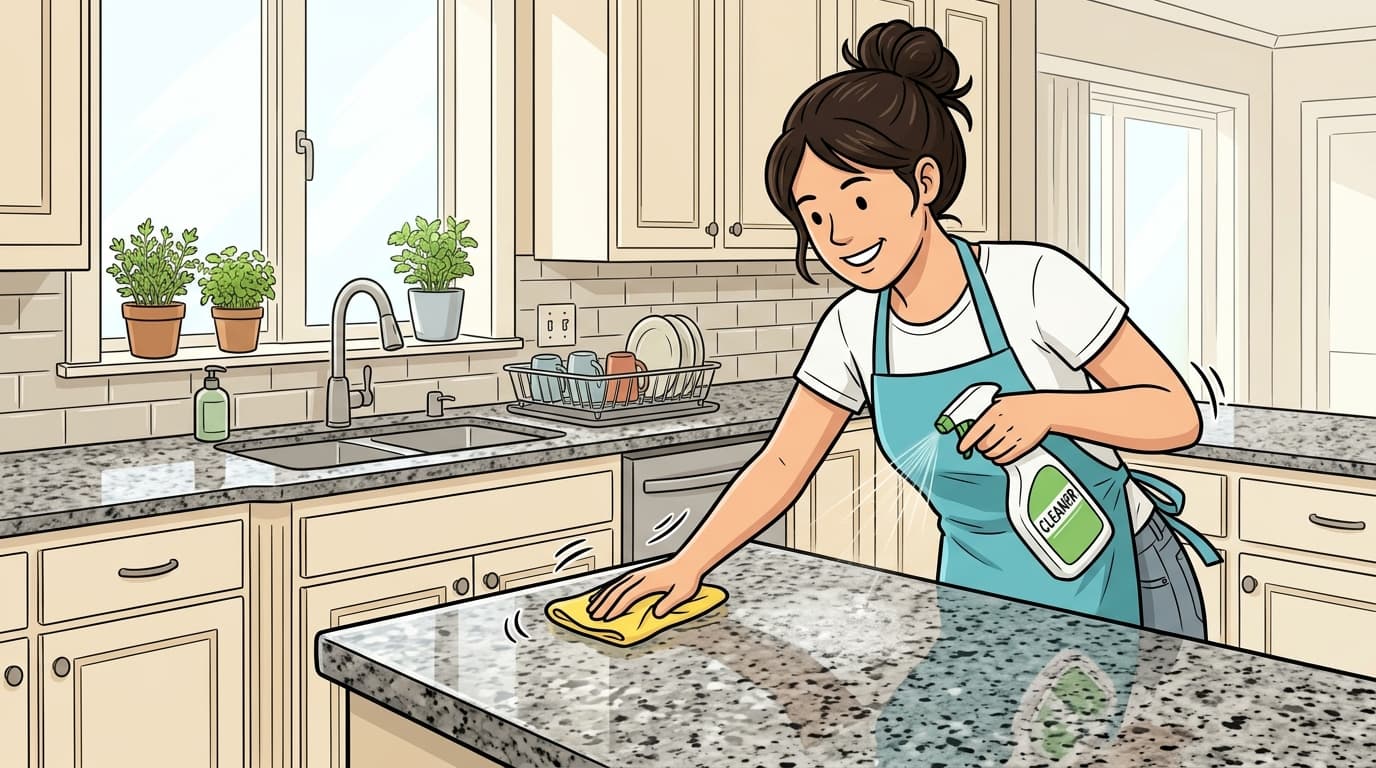
How to Clean and Seal Granite Countertops: The Step-by-Step Care Guide
Step-by-step wikiHow-style guide to cleaning, sanitizing, and sealing natural granite. Master the water droplet test, remove stubborn water rings, and protect your stone factory-fresh.
Read Guide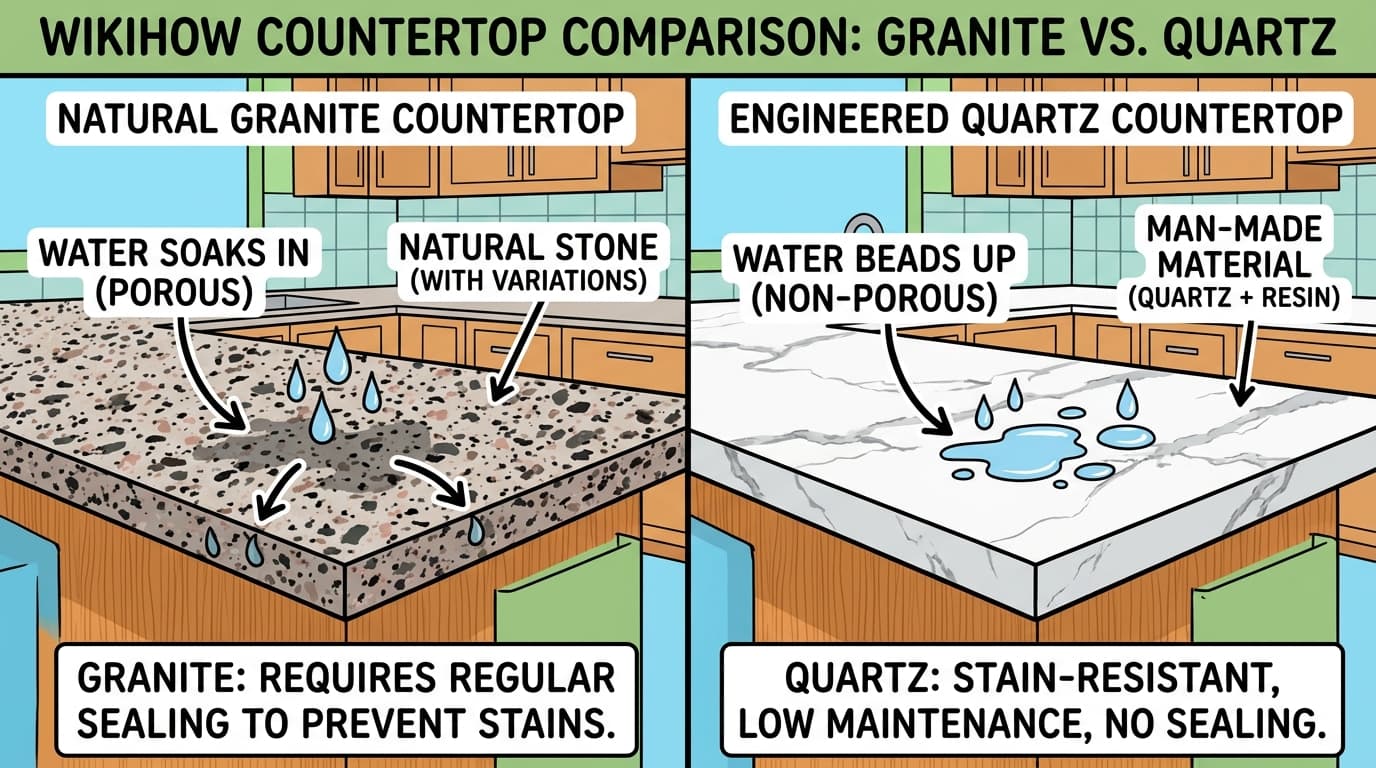
Granite vs. Quartz: Which Stone Does Your Kitchen Actually Need?
Confused between natural granite and engineered quartz? Learn the real differences in heat resistance, daily maintenance, seam visibility, and price per square foot.
Read Guide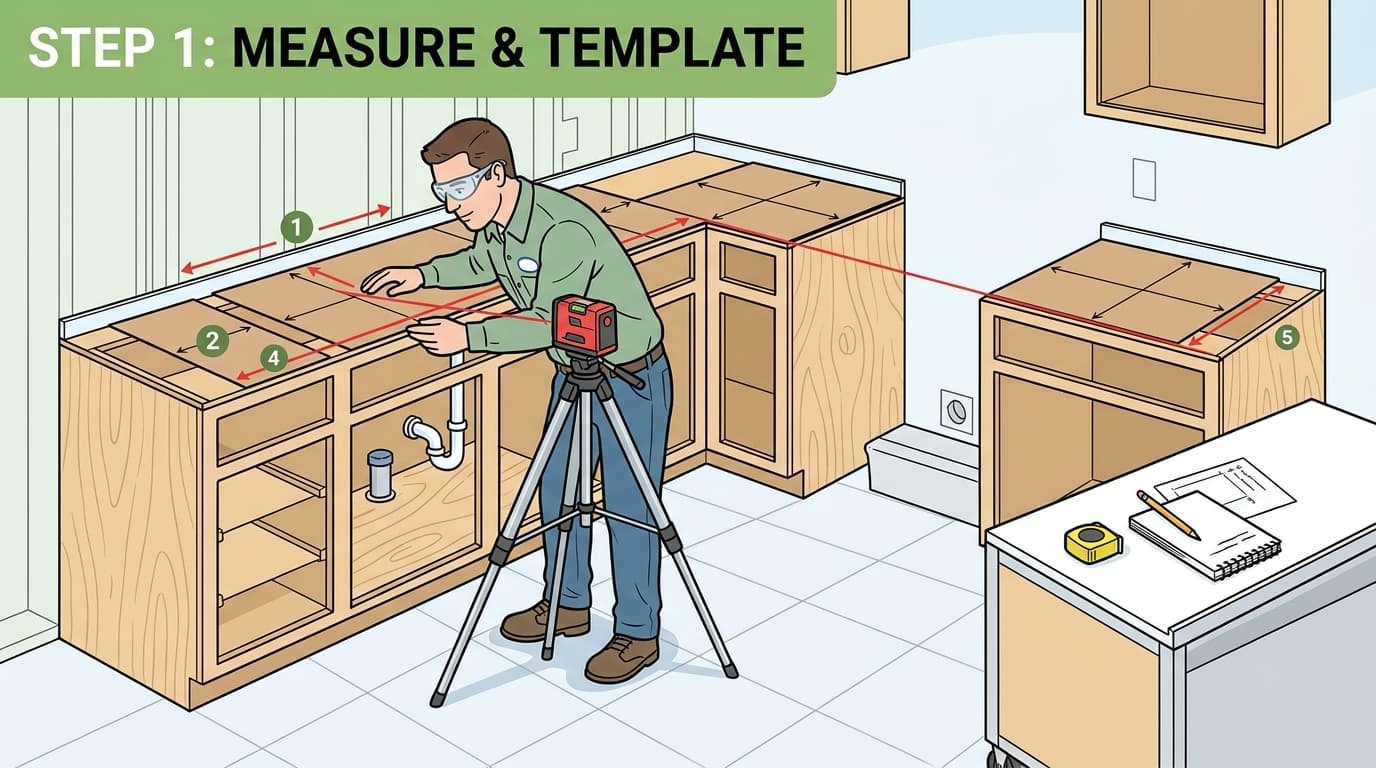
How to Prepare Your Kitchen for Countertop Installation: The Ultimate Checklist
Step-by-step preparation guide for laser templating and install day. Learn how to clear base cabinets, coordinate plumbers, disconnect sinks, and ensure a flawless fit.
Read Guide